

- Gate valve
-
- BS5163 rising stem soft seal gate valveDN1000 Extension stem double flange soft seal gate valveWEIZIDOMDIN F4 resilient seated gate valveDN450-1200 Resilient Seated Gate ValveDIN F5 resilient seated gate valveSocket connection soft seal gate valveWEIZIDOMUnderground cap soft seal gate valveHard seal gate valveAPI slab Gate ValveStainless steel flange gate valveWafer knife gate valvePneumatic gate valveSoft seal gate valveExtension stem gate valveUL/FM fire protection groove ends gate valveRising stem forged steel gate valvecarbon steel gate valveStainless steel threaded gate valveDIN soft seal gate valveANSI soft sealing gate valve 200PSICast iron gate valveBS resilient seated gate valve
- Butterfly valve
-
- DN900 pneumatic triple eccentric hard seal butterfly valveD643H Triple Eccentric Butterfly ValveD343H Hard seal butterfly valveMulti standard EPDM seated butterfly valveSingle flange butterfly valveDN2000 Double eccentric butterfly valveFlange butterfly valveLug butterfly valveWafer butterfly valve with handleWorm gear operated butterfly valveWafer lined fluorine butterfly valveStainless steel wafer butterfly valveStainless steel flanged butterfly valveThree eccentric flange butterfly valvePneumatic flanged butterfly valvePneumatic wafer butterfly valveTriple eccentric butterfly valve wafer typeWafer butterfly valve ULC approvedInflatable seat butterfly valveHigh performance butterfly valveGrooved end butterfly valveElectric soft seal butterfly valveFlange fluorine lined butterfly valveHandle aluminum butterfly valveWorm Gear Aluminum Butterfly ValveFull PTFE lined butterfly valve wafer typeOne stem no-pin wafer butterfly valveMulti standard aluminum stem butterfly valveStainless Steel wafer Butterfly ValveAluminium handle operated lug butterfly valveLever Operated Flange Butterfly ValveButterfly valve stemButterfly valve discButterfly valve seat
- Ball valve
-
- DN1400 top-mounted eccentric semi-ball valveFlanged three-way ball valveFully welded ball valveNatural gas ball valveHigh platform flange ball valve1 PC ball valveFixed ball valvePTFE seat flanged ball valveMetal seat ball valveAPI 6D ball valve3 Piece ball valveFull Bore 3 way ball valve L-Port3 Way T-Port ball valve2PC Ball valve female thread stainless steel
- Globe Valve
-
- API Carbon Steel Globe ValveBellows Globe ValveStainless steel flange globe valveStainless steel thread S type globe valveStainless steel thread B type globe valveCast Steel Globe ValvePiston Globe ValveWCB Carbon Steel Globe Check Valveelectric motorized control stainless steel SS316 globe valveBrass Globe ValveCryogenic Globe valveHT200 Globe ValveThreaded Stainless Steel Globe ValveGG25 Globe ValveANSI API Cast Steel And Stainless Steel Globe valve
- Check valve
-
- Rubber seal check valveDN800 Slow closing check valveDN800 Rubber Disc Check ValveButterfly Buffering Check Valvecheck valve with counter weightSilent Check ValveWCB Swing check valveSwing Check ValveSingle Chip Check Valve H74WStainless Steel Wafer Check ValveSwing Start Check ValveFoot check valveAPI Swing Check ValveDIN Flange check valveSingle plate check valveLifting Check ValveBottom ValveHammer Diminish Noises Check ValveWafer Check ValveWafer dual plate check valve
- Control valve
-
- Static Balancing ValveCage Guided Sleeve Globe Control ValveDN1000 Piston Flow Regulating ValveDN1600 Electric Actuator Flow Regulating ValvePneumatic Flanged Butterfly ValvePneumatic Wafer Butterfly ValveAngle Seat ValvePneumatic gate valveElectric three-way control valveElectric sleeve control valve
- Water Meter
-
- Vertical Type Water MetersStainless steel threaded water meterPiston water meterPlastic water meterMore flow rotor dry water meterspiral vane flange water meterCI wotlman water meter with pulse outputLXCLG(R) Vertical removable element woltman cold (hot) water meterSingle flow rotor dry water meterPrepaid Token Water MeterElectromagnetic flowmeterRotary Piston Liquid Sealed Water MeterRotary Piston Liquid Sealed Water Meter
- Air valve
-
- Double ball exhaust valveDoubleair Air Valve SaudiDoubleair Air Valve Southeast AsiaDoubleair Air Valve South AmericaDouble Air ValveThreaded Air ValveSingle Air ValveTriple Functions Air ValveAutomatic Air Release ValveAutomatic release valveAutomatic exhaust valveComposite Exhaust Air ValveBrass exhaust valveDouble Ball Air Valve
- Pipe Repair & Coupling
-
- Flexible Multi-Function Pipe Coupling ZFJ-SSS Semi-Circle Pipe Repair Clamp SJW-HDuctile Iron Band Repair ClampStainless Steel Band Repair ClampDouble-Section Pipe Repair CouplingFolding Type Pipe RepairSingle-Section Multi-Function Pipe Coupling MF-SGear-Ring Type Multi-Function Pipe Coupling GR-SZBW Damping Corrugated Hose
- Dismantling Joint
-
- VSSJAFC(CC2F) Detachable Flange Transmission JointVSSJA-2(B2F) Double Flange Limited Expansion JointVSSJA-1(BF) Single Flange Limited Expansion JointVSSJA(AF) Flange Loose Expansion JointJGD-B Threaded Rubber JointZBW Damping Corrugated HoseKXT-S Flexible Dual-Spherical Rubber JointKXT Rubber Soft JointFlange Adaptor
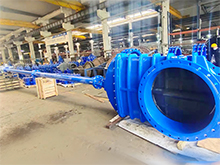
How to Choose the Right Pinch Valve
Widely used across industries such as mining, wastewater treatment, and chemical processing, pinch valves offer simple structure, excellent sealing performance, and outstanding resistance to wear and blockage.
In this guide, you’ll learn:
~ What a pinch valve is
~ The key role it plays in pipeline systems
~ Typical industrial applications
~ How to choose the right pinch valve for your project
What Is a Pinch Valve?
A Pinch Valve is a type of valve that controls fluid flow by pinching (compressing) a flexible rubber sleeve inside the valve body.
⚙️ Key Components:
~ Valve body
~ Elastomer sleeve (rubber liner)
~ Actuator (manual, pneumatic, or electric)
⚙️ Working Principle:
When the actuator applies force, the sleeve is compressed, completely shutting off the flow. When released, the sleeve returns to its original shape, allowing full flow.
Key advantage:
The process media only contacts the rubber sleeve, not the metal parts of the valve.

Functions of Pinch Valve in Pipeline Systems
Pinch valves play a much more critical role than simple on/off control. Their unique design makes them highly effective in demanding industrial environments.
1️⃣ Reliable Shut-Off (Zero Leakage Performance)
Pinch valves provide bubble-tight sealing because the rubber sleeve is fully compressed.
~ No gaps or sealing surfaces like traditional valves
~ Ideal for systems requiring zero leakage
~ Suitable for hazardous or toxic media
This makes pinch valves especially valuable in chemical plants and wastewater systems.
2️⃣ Excellent Anti-Clogging Capability
Unlike ball valves or gate valves, pinch valves have:
Full bore (no obstruction)
No internal cavities or dead zones
This ensures:
Smooth passage for slurries, powders, and viscous fluids
Minimal risk of sediment buildup
Reduced downtime due to blockage
Perfect for handling solid-laden media.
3️⃣ Superior Wear and Corrosion Resistance
Since only the rubber sleeve is in contact with the fluid:
The valve body remains protected
Different sleeve materials can resist:
Abrasion (natural rubber)
Chemicals (EPDM, NBR)
This significantly extends service life in harsh environments.
4️⃣ Precise Flow Control (Especially Pneumatic Type)
Pneumatic pinch valves allow:
Gradual sleeve compression
Accurate throttling of flow
This enables:
Fine control in dosing systems
Stable operation in automated processes
5️⃣ Low Maintenance & Easy Replacement
The sleeve is the only wear part
Easy to replace without removing the valve body
Reduced maintenance cost compared to other valves
Typical Applications of Pinch Valve
Pinch valves are particularly suitable for industries where abrasion, corrosion, or clogging are major concerns.
1. Mining & Slurry Handling
Application:
* Tailings transport
* Mineral slurry pipelines
* Sand and gravel systems
Why pinch valves?
* Handle highly abrasive particles
* No clogging even with dense slurry
* Long service life compared to metal-seated valves
2. Wastewater Treatment
Application:
* Sludge transfer
* Raw sewage pipelines
* Chemical dosing systems
Advantages:
* Prevents blockage from solid waste
* Ensures tight shut-off to avoid leakage
* Reduces maintenance frequency
3. Chemical Processing
Application:
* Acid and alkali transfer
* Corrosive fluid systems
Why suitable:
* Sleeve isolates corrosive media
* Multiple elastomer options for chemical compatibility
* Improved safety and reliability
4. Food & Pharmaceutical Industry
Application:
Hygienic fluid handling
Liquid food processing
Benefits:
* Media only contacts the sleeve (reduces contamination risk)
* Smooth internal surface for easy cleaning
* Complies with hygiene requirements (depending on material)
5. Pneumatic Conveying Systems
Application:
Powder transport (cement, flour, chemicals)
Bulk material handling
Advantages:
* Fast response
* Handles dry solids efficiently
* Durable under continuous operation

How to Choose the Right Pinch Valve
Selecting the correct pinch valve is crucial for performance, durability, and cost-efficiency. Here are the key factors to consider:
✔ 1. Media Type (Most Critical Factor)
Understand the characteristics of your fluid:
Does it contain solids or particles?
Is it corrosive or chemically aggressive?
Is it viscous or sticky?
Sleeve material selection:
Natural Rubber (NR): abrasion resistance (slurry)
EPDM: chemical resistance
NBR: oil resistance
✔ 2. Pressure & Temperature Conditions
Standard pinch valves are typically used in low to medium pressure systems (≤10 bar)
High temperatures may affect sleeve elasticity
Always verify:
Maximum working pressure
Temperature compatibility of the sleeve
✔ 3. Valve Size & Flow Requirements
Choose correct diameter (DN) based on pipeline size
Consider flow rate and velocity
Oversized or undersized valves can reduce efficiency.
✔ 4. Actuation Method
Different applications require different control methods:
Manual pinch valve
Cost-effective
Suitable for low-frequency operation
Pneumatic pinch valve
Ideal for automation
Precise control
Widely used in industrial systems
Electric pinch valve
Remote control capability
Suitable for integrated control systems
✔ 5. Installation Type
Flanged connection (most common for industrial use)
Threaded connection (for smaller systems)
Ensure compatibility with existing pipeline standards (ANSI, DIN, etc.)
✔ 6. Maintenance & Lifecycle Cost
Check sleeve replacement frequency
Evaluate ease of maintenance
Consider long-term cost, not just initial price
✔ 7. Application Environment
Indoor or outdoor installation
Exposure to UV, chemicals, or extreme conditions
Choose materials and coatings accordingly.

1. What is the main advantage of a pinch valve?
Its anti-clogging design and zero-leakage sealing, especially for slurry and abrasive media.
2. Can pinch valves be used for high-pressure systems?
Generally designed for low to medium pressure. Special designs are required for high-pressure applications.
3. How often should the sleeve be replaced?
Depends on usage conditions, but typically much easier and cheaper than replacing a full valve.
4. Are pinch valves suitable for automation?
Yes, pneumatic and electric pinch valves are widely used in automated systems.
5. What industries benefit most from pinch valves?
Mining, wastewater treatment, chemical processing, food production, and bulk material handling.
