

- Gate valve
-
- BS5163 rising stem soft seal gate valveDN1000 Extension stem double flange soft seal gate valveWEIZIDOMDIN F4 resilient seated gate valveDN450-1200 Resilient Seated Gate ValveDIN F5 resilient seated gate valveSocket connection soft seal gate valveWEIZIDOMUnderground cap soft seal gate valveHard seal gate valveAPI slab Gate ValveStainless steel flange gate valveWafer knife gate valvePneumatic gate valveSoft seal gate valveExtension stem gate valveUL/FM fire protection groove ends gate valveRising stem forged steel gate valvecarbon steel gate valveStainless steel threaded gate valveDIN soft seal gate valveANSI soft sealing gate valve 200PSICast iron gate valveBS resilient seated gate valve
- Butterfly valve
-
- DN900 pneumatic triple eccentric hard seal butterfly valveD643H Triple Eccentric Butterfly ValveD343H Hard seal butterfly valveMulti standard EPDM seated butterfly valveSingle flange butterfly valveDN2000 Double eccentric butterfly valveFlange butterfly valveLug butterfly valveWafer butterfly valve with handleWorm gear operated butterfly valveWafer lined fluorine butterfly valveStainless steel wafer butterfly valveStainless steel flanged butterfly valveThree eccentric flange butterfly valvePneumatic flanged butterfly valvePneumatic wafer butterfly valveTriple eccentric butterfly valve wafer typeWafer butterfly valve ULC approvedInflatable seat butterfly valveHigh performance butterfly valveGrooved end butterfly valveElectric soft seal butterfly valveFlange fluorine lined butterfly valveHandle aluminum butterfly valveWorm Gear Aluminum Butterfly ValveFull PTFE lined butterfly valve wafer typeOne stem no-pin wafer butterfly valveMulti standard aluminum stem butterfly valveStainless Steel wafer Butterfly ValveAluminium handle operated lug butterfly valveLever Operated Flange Butterfly ValveButterfly valve stemButterfly valve discButterfly valve seat
- Ball valve
-
- DN1400 top-mounted eccentric semi-ball valveFlanged three-way ball valveFully welded ball valveNatural gas ball valveHigh platform flange ball valve1 PC ball valveFixed ball valvePTFE seat flanged ball valveMetal seat ball valveAPI 6D ball valve3 Piece ball valveFull Bore 3 way ball valve L-Port3 Way T-Port ball valve2PC Ball valve female thread stainless steel
- Globe Valve
-
- API Carbon Steel Globe ValveBellows Globe ValveStainless steel flange globe valveStainless steel thread S type globe valveStainless steel thread B type globe valveCast Steel Globe ValvePiston Globe ValveWCB Carbon Steel Globe Check Valveelectric motorized control stainless steel SS316 globe valveBrass Globe ValveCryogenic Globe valveHT200 Globe ValveThreaded Stainless Steel Globe ValveGG25 Globe ValveANSI API Cast Steel And Stainless Steel Globe valve
- Check valve
-
- Rubber seal check valveDN800 Slow closing check valveDN800 Rubber Disc Check ValveButterfly Buffering Check Valvecheck valve with counter weightSilent Check ValveWCB Swing check valveSwing Check ValveSingle Chip Check Valve H74WStainless Steel Wafer Check ValveSwing Start Check ValveFoot check valveAPI Swing Check ValveDIN Flange check valveSingle plate check valveLifting Check ValveBottom ValveHammer Diminish Noises Check ValveWafer Check ValveWafer dual plate check valve
- Control valve
-
- Static Balancing ValveCage Guided Sleeve Globe Control ValveDN1000 Piston Flow Regulating ValveDN1600 Electric Actuator Flow Regulating ValvePneumatic Flanged Butterfly ValvePneumatic Wafer Butterfly ValveAngle Seat ValvePneumatic gate valveElectric three-way control valveElectric sleeve control valve
- Water Meter
-
- Vertical Type Water MetersStainless steel threaded water meterPiston water meterPlastic water meterMore flow rotor dry water meterspiral vane flange water meterCI wotlman water meter with pulse outputLXCLG(R) Vertical removable element woltman cold (hot) water meterSingle flow rotor dry water meterPrepaid Token Water MeterElectromagnetic flowmeterRotary Piston Liquid Sealed Water MeterRotary Piston Liquid Sealed Water Meter
- Air valve
-
- Double ball exhaust valveDoubleair Air Valve SaudiDoubleair Air Valve Southeast AsiaDoubleair Air Valve South AmericaDouble Air ValveThreaded Air ValveSingle Air ValveTriple Functions Air ValveAutomatic Air Release ValveAutomatic release valveAutomatic exhaust valveComposite Exhaust Air ValveBrass exhaust valveDouble Ball Air Valve
- Pipe Repair & Coupling
-
- Flexible Multi-Function Pipe Coupling ZFJ-SSS Semi-Circle Pipe Repair Clamp SJW-HDuctile Iron Band Repair ClampStainless Steel Band Repair ClampDouble-Section Pipe Repair CouplingFolding Type Pipe RepairSingle-Section Multi-Function Pipe Coupling MF-SGear-Ring Type Multi-Function Pipe Coupling GR-SZBW Damping Corrugated Hose
- Dismantling Joint
-
- VSSJAFC(CC2F) Detachable Flange Transmission JointVSSJA-2(B2F) Double Flange Limited Expansion JointVSSJA-1(BF) Single Flange Limited Expansion JointVSSJA(AF) Flange Loose Expansion JointJGD-B Threaded Rubber JointZBW Damping Corrugated HoseKXT-S Flexible Dual-Spherical Rubber JointKXT Rubber Soft JointFlange Adaptor
Valve Selection for Urban Water Supply Systems
2026-04-15
Valve Selection for Urban Water Supply Systems: A Complete Guide
Urban water supply systems are critical to the health and well-being of city residents, delivering clean, safe water from treatment plants to homes, businesses, and public facilities. These systems operate under strict requirements for water quality, pressure stability, and reliability—making valve selection a key factor in ensuring smooth operation. Valves in urban water supply systems must not only control flow and pressure but also prevent contamination, reduce water loss, and withstand long-term use in diverse environments.
As a professional valve manufacturer with ISO, CE, and API certifications, we specialize in providing high-quality valves tailored for urban water supply systems worldwide. This guide outlines the key valve types used in urban water supply, their applications, and a step-by-step selection process to help engineers, water utility managers, and procurement teams choose the right valves for their specific needs.
Key Valve Types for Urban Water Supply Systems
Urban water supply systems consist of four main stages: water treatment, transmission, distribution, and end-user supply. Each stage requires specific valve types to meet its unique requirements. Below are the most commonly used valves in each stage.
1. Valves for Water Treatment Plants
Water treatment plants (WTPs) are responsible for purifying raw water into potable water, and valves here must ensure precise control of chemical dosing, filtration, and disinfection processes. The key requirements are corrosion resistance, precise flow control, and compliance with water quality standards.
Common Valve Types:
- Globe Valves: Ideal for precise flow control and throttling, used in chemical dosing systems (e.g., chlorine, fluoride) to regulate the amount of chemicals added to the water. Their linear motion design allows for accurate adjustment, ensuring consistent water treatment.
- Ball Valves: Used for quick shut-off in chemical storage and dosing lines. Full-bore ball valves provide minimal pressure drop, while soft-seated models (PTFE, EPDM) ensure bubble-tight shut-off to prevent chemical leakage and water contamination.
- Butterfly Valves: Used in large-diameter filtration and sedimentation tank lines, controlling the flow of water through filters and clarifiers. Wafer-type butterfly valves are compact and cost-effective, making them suitable for WTPs with limited space.
- Check Valves: Installed in chemical dosing lines and pump outlets to prevent backflow, ensuring that chemicals do not contaminate raw water or treated water supplies.
2. Valves for Water Transmission Pipelines
Water transmission pipelines carry treated water from WTPs to urban distribution networks, often over long distances and at high pressures. Valves here must provide reliable isolation, pressure control, and protection against water hammer.
Common Valve Types:
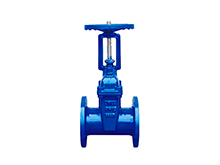
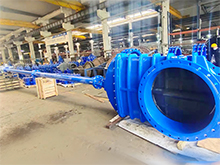
- Gate Valves: Used as main shut-off valves for transmission pipelines, providing full-bore flow and minimal pressure drop. Resilient-seated gate valves are preferred for their bubble-tight shut-off and resistance to corrosion in potable water.
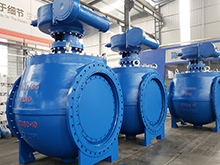
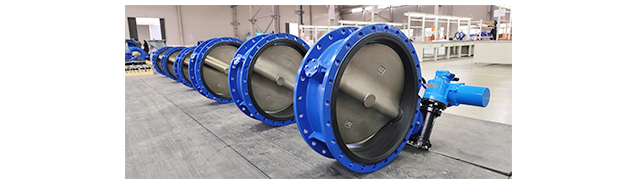
- Butterfly Valves: Used in large-diameter transmission pipelines (DN1000+) due to their compact size and light weight. Triple eccentric butterfly valves are suitable for high-pressure transmission lines (PN40-PN100), offering low operating torque and long service life.
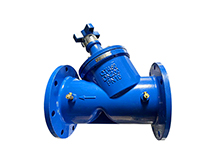
- Pressure Reducing Valves (PRVs): Installed at the entry points of urban distribution networks to reduce high transmission pressure to a stable, safe pressure for distribution. Pilot-operated PRVs provide precise pressure control, ensuring consistent water pressure across the network.
- Air Valves: Installed at the highest points of transmission pipelines to remove trapped air, preventing air resistance and pipeline damage from negative pressure. Composite air valves are ideal, as they can release large volumes of air during pipeline filling and small amounts of air during normal operation.
3. Valves for Urban Water Distribution Networks
Distribution networks deliver water from transmission pipelines to homes, businesses, and public facilities. Valves here must be durable, easy to maintain, and capable of isolating sections of the network for maintenance without disrupting the entire system.
Common Valve Types:
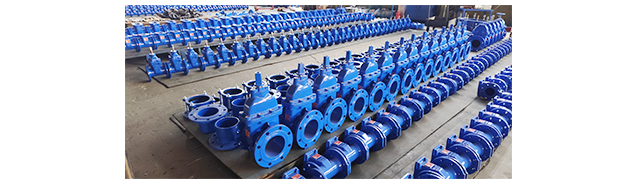
- Gate Valves: Used as section valves in distribution pipelines, allowing isolation of specific areas for maintenance (e.g., pipe repairs, leak detection). Soft-seated gate valves are preferred for their bubble-tight shut-off and low maintenance requirements.
- Ball Valves: Used in small-diameter distribution lines (DN15-DN100) for residential and commercial connections. They are easy to operate, compact, and provide reliable shut-off for individual properties or small sections of the network.
- Butterfly Valves: Used in medium-diameter distribution lines (DN100-DN500), providing a balance of flow control and isolation. Lug-type butterfly valves are ideal, as they allow single-side isolation for maintenance.
- Check Valves: Installed in distribution lines to prevent backflow, especially in areas where water pressure may fluctuate (e.g., high-rise buildings). Silent check valves are preferred to reduce noise and prevent water hammer.
4. Valves for End-User Applications
End-user applications include residential, commercial, and public facilities (e.g., hospitals, schools, office buildings). Valves here must be compact, easy to operate, and comply with water quality standards.
Common Valve Types:
- Ball Valves: Used as shut-off valves for individual homes and businesses, providing quick, reliable shut-off for maintenance or emergencies.
- Globe Valves: Used in applications requiring flow control (e.g., hot water systems, irrigation for commercial buildings), allowing precise adjustment of water flow.
- Pressure Reducing Valves (PRVs): Installed in high-rise buildings to reduce water pressure to a safe level for internal plumbing systems, preventing pipe damage and leaks.
Step-by-Step Valve Selection Process for Urban Water Supply Systems
Selecting the right valve for urban water supply systems requires a systematic approach, considering the specific requirements of each stage and application. Follow these steps to ensure optimal valve selection:
Step 1: Define the Application Requirements
Clearly identify the valve’s purpose: Is it for shut-off, flow control, pressure control, or backflow prevention? Determine the operating conditions, including:
- Media: Potable water, raw water, or chemical solutions (e.g., dosing chemicals).
- Pressure: Operating pressure (PN10-PN100) and maximum pressure spikes.
- Flow rate: Maximum and minimum flow rates to ensure the valve can handle the required flow without excessive pressure drop.
- Temperature: Ambient and media temperature (typically 0°C-50°C for urban water supply).
- Pipeline size: DN15-DN2000, depending on the application (end-user vs. transmission).
Step 2: Choose the Right Valve Type
Based on the application requirements, select the valve type that best meets the needs:
- Shut-off: Gate valves (large diameter), ball valves (small-medium diameter), butterfly valves (medium-large diameter).
- Flow control: Globe valves (precise control), butterfly valves (basic control).
- Pressure control: Pressure reducing valves (PRVs).
- Backflow prevention: Check valves (swing, lift, silent).
- Chemical dosing: Globe valves (precise dosing), ball valves (shut-off).
Step 3: Select Materials for Corrosion Resistance & Water Quality
Valves in urban water supply systems must be made of materials that are corrosion-resistant and do not contaminate potable water. Recommended materials include:
- Body materials: Ductile iron (for large valves), stainless steel 304/316 (for corrosion-prone areas or chemical contact), brass (for small valves).
- Seat materials: EPDM, NBR, or PTFE (food-grade, non-toxic, and resistant to potable water).
- Trim materials: Stainless steel, bronze (corrosion-resistant and non-toxic).
Ensure materials comply with water quality standards such as GB/T 17219 (China) and NSF/ANSI 61 (international) to prevent water contamination.
Step 4: Consider Installation & Maintenance Requirements
Choose valves that are easy to install and maintain, especially in urban areas where access may be limited:
- Connection type: Wafer (compact, easy to install), lug (allows single-side isolation), flanged (high integrity for high pressure).
- Actuation: Manual (for small valves or infrequent operation), electric (for remote control or large valves), pneumatic (for industrial applications).
- Maintenance: Valves with simple structures (e.g., ball valves, butterfly valves) require less maintenance than complex valves (e.g., globe valves). Choose valves with replaceable seats and trim for easy maintenance.
Step 5: Ensure Compliance with Standards & Certifications
Valves for urban water supply systems must meet international and regional standards to ensure safety and reliability:
- ISO 9001: Quality management system.
- CE (PED): Pressure Equipment Directive for European markets.
- API 598: Valve inspection and testing.
- GB/T 12224: Industrial valve pressure-temperature ratings (China).
- GOST: Regional standard for Central Asia.
Common Mistakes to Avoid in Valve Selection
To ensure optimal performance and avoid costly mistakes, avoid these common pitfalls:
- Choosing the wrong valve type: Using a gate valve for flow control (instead of a globe valve) or a butterfly valve for high-pressure applications (instead of a gate valve or triple eccentric butterfly valve).
- Ignoring corrosion resistance: Using carbon steel valves in corrosive environments (e.g., coastal areas) leading to premature failure.
- Underestimating flow rate: Selecting a valve with a smaller bore than the pipeline, leading to excessive pressure drop and reduced system efficiency.
- Neglecting maintenance: Choosing valves with complex structures that are difficult to maintain, leading to increased downtime and costs.
- Not complying with water quality standards: Using materials that contaminate potable water, risking public health.
Valve selection is a critical aspect of urban water supply system design, directly impacting water quality, system reliability, and operational efficiency. By understanding the key valve types, their applications, and following a systematic selection process, you can choose valves that meet the specific needs of each stage of the water supply system.
Our ISO, CE, and API-certified valves are engineered to comply with the strictest water quality and safety standards, providing reliable performance, corrosion resistance, and easy maintenance. Whether you need valves for water treatment plants, transmission pipelines, distribution networks, or end-user applications, we offer customized solutions to meet your project requirements.
For technical advice, pricing, or custom valve solutions for your urban water supply project, contact Eileen via WhatsApp:
Tags: urban water supply valve, water treatment valve, water distribution valve, gate valve for water supply, ball valve for potable water, pressure reducing valve, air valve for water pipeline, valve manufacturer
Pre : How to Choose the Right Pinch Valve
Next : Back To List
