

- Gate valve
-
- BS5163 rising stem soft seal gate valveDN1000 Extension stem double flange soft seal gate valveWEIZIDOMDIN F4 resilient seated gate valveDN450-1200 Resilient Seated Gate ValveDIN F5 resilient seated gate valveSocket connection soft seal gate valveWEIZIDOMUnderground cap soft seal gate valveHard seal gate valveAPI slab Gate ValveStainless steel flange gate valveWafer knife gate valvePneumatic gate valveSoft seal gate valveExtension stem gate valveUL/FM fire protection groove ends gate valveRising stem forged steel gate valvecarbon steel gate valveStainless steel threaded gate valveDIN soft seal gate valveANSI soft sealing gate valve 200PSICast iron gate valveBS resilient seated gate valve
- Butterfly valve
-
- DN900 pneumatic triple eccentric hard seal butterfly valveD643H Triple Eccentric Butterfly ValveD343H Hard seal butterfly valveMulti standard EPDM seated butterfly valveSingle flange butterfly valveDN2000 Double eccentric butterfly valveFlange butterfly valveLug butterfly valveWafer butterfly valve with handleWorm gear operated butterfly valveWafer lined fluorine butterfly valveStainless steel wafer butterfly valveStainless steel flanged butterfly valveThree eccentric flange butterfly valvePneumatic flanged butterfly valvePneumatic wafer butterfly valveTriple eccentric butterfly valve wafer typeWafer butterfly valve ULC approvedInflatable seat butterfly valveHigh performance butterfly valveGrooved end butterfly valveElectric soft seal butterfly valveFlange fluorine lined butterfly valveHandle aluminum butterfly valveWorm Gear Aluminum Butterfly ValveFull PTFE lined butterfly valve wafer typeOne stem no-pin wafer butterfly valveMulti standard aluminum stem butterfly valveStainless Steel wafer Butterfly ValveAluminium handle operated lug butterfly valveLever Operated Flange Butterfly ValveButterfly valve stemButterfly valve discButterfly valve seat
- Ball valve
-
- DN1400 top-mounted eccentric semi-ball valveFlanged three-way ball valveFully welded ball valveNatural gas ball valveHigh platform flange ball valve1 PC ball valveFixed ball valvePTFE seat flanged ball valveMetal seat ball valveAPI 6D ball valve3 Piece ball valveFull Bore 3 way ball valve L-Port3 Way T-Port ball valve2PC Ball valve female thread stainless steel
- Globe Valve
-
- API Carbon Steel Globe ValveBellows Globe ValveStainless steel flange globe valveStainless steel thread S type globe valveStainless steel thread B type globe valveCast Steel Globe ValvePiston Globe ValveWCB Carbon Steel Globe Check Valveelectric motorized control stainless steel SS316 globe valveBrass Globe ValveCryogenic Globe valveHT200 Globe ValveThreaded Stainless Steel Globe ValveGG25 Globe ValveANSI API Cast Steel And Stainless Steel Globe valve
- Check valve
-
- Rubber seal check valveDN800 Slow closing check valveDN800 Rubber Disc Check ValveButterfly Buffering Check Valvecheck valve with counter weightSilent Check ValveWCB Swing check valveSwing Check ValveSingle Chip Check Valve H74WStainless Steel Wafer Check ValveSwing Start Check ValveFoot check valveAPI Swing Check ValveDIN Flange check valveSingle plate check valveLifting Check ValveBottom ValveHammer Diminish Noises Check ValveWafer Check ValveWafer dual plate check valve
- Control valve
-
- Static Balancing ValveCage Guided Sleeve Globe Control ValveDN1000 Piston Flow Regulating ValveDN1600 Electric Actuator Flow Regulating ValvePneumatic Flanged Butterfly ValvePneumatic Wafer Butterfly ValveAngle Seat ValvePneumatic gate valveElectric three-way control valveElectric sleeve control valve
- Water Meter
-
- Vertical Type Water MetersStainless steel threaded water meterPiston water meterPlastic water meterMore flow rotor dry water meterspiral vane flange water meterCI wotlman water meter with pulse outputLXCLG(R) Vertical removable element woltman cold (hot) water meterSingle flow rotor dry water meterPrepaid Token Water MeterElectromagnetic flowmeterRotary Piston Liquid Sealed Water MeterRotary Piston Liquid Sealed Water Meter
- Air valve
-
- Double ball exhaust valveDoubleair Air Valve SaudiDoubleair Air Valve Southeast AsiaDoubleair Air Valve South AmericaDouble Air ValveThreaded Air ValveSingle Air ValveTriple Functions Air ValveAutomatic Air Release ValveAutomatic release valveAutomatic exhaust valveComposite Exhaust Air ValveBrass exhaust valveDouble Ball Air Valve
- Pipe Repair & Coupling
-
- Flexible Multi-Function Pipe Coupling ZFJ-SSS Semi-Circle Pipe Repair Clamp SJW-HDuctile Iron Band Repair ClampStainless Steel Band Repair ClampDouble-Section Pipe Repair CouplingFolding Type Pipe RepairSingle-Section Multi-Function Pipe Coupling MF-SGear-Ring Type Multi-Function Pipe Coupling GR-SZBW Damping Corrugated Hose
- Dismantling Joint
-
- VSSJAFC(CC2F) Detachable Flange Transmission JointVSSJA-2(B2F) Double Flange Limited Expansion JointVSSJA-1(BF) Single Flange Limited Expansion JointVSSJA(AF) Flange Loose Expansion JointJGD-B Threaded Rubber JointZBW Damping Corrugated HoseKXT-S Flexible Dual-Spherical Rubber JointKXT Rubber Soft JointFlange Adaptor
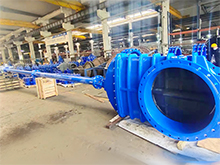
Simplify Your Piping: Why Three-Way Directional Valves Are Essential for Mining, Tailings & Chemical Processing
Three-Way Directional Valve: The Ultimate Solution for Slurry Diversion & Tailings Switching in Mining
In the mining and mineral processing industry, efficient flow control is about more than just opening and closing a line—it is about routing abrasive slurries, tailings, and chemical solutions to the right destination at the right time. Traditionally, achieving this required complex piping networks, multiple isolation valves, and numerous tee fittings. This not only increases installation costs but also creates more potential leak points and takes up valuable plant space.
The Three-Way Directional Valve changes this paradigm. Designed to selectively direct flow from one inlet to one of two outlets (or combine flow from two inlets to one outlet), this specialized valve performs the work of multiple components within a single, compact body. By simply rotating the internal mechanism (plug or ball) 90 degrees, operators can seamlessly switch flow paths without reconfiguring any piping.
Built to rigorous API 599 and GB/T 26144 standards, and available in materials ranging from cost-effective carbon steel (WCB) to corrosion-resistant stainless steel (CF8M), the three-way directional valve is engineered to withstand the harshest mining environments. Whether you are alternating feed between parallel thickeners, switching tailings between disposal cells, or distributing low-concentration leach solutions, this valve delivers reliable, bubble-tight performance.
In this guide, we will explore the operating principles, key configurations (L-port vs. T-port), material selection criteria, and primary applications of the three-way directional valve in the mining industry.

What is a Three-way Directional Valve?
A Three-way Directional Valve is a specialized flow control valve designed to selectively direct the flow of media from one inlet to one of two outlets (or combine flow from two inlets to one outlet). Unlike standard two-way valves that simply open or close a single flow path, a three-way directional valve enables flow diversion, selection, or mixing within a single valve body, eliminating the need for multiple valves and complex piping arrangements.
The valve features three ports — typically one common port (inlet) and two outlet ports (or vice versa). The internal mechanism (plug, ball, or gate) rotates or moves to align the flow path with the desired outlet, allowing the operator to switch flow direction without reconfiguring piping.
Technical Specifications
Design Standard: API 599, GB/T 26144
Diameter Range: DN50-800
Pressure Range: PN6-PN25 150LB
Medium: Sewage, slurry, mud, low-concentration acid and alkali solutions
Body Material: WCB CF8 CF8M
Rubber Material: NR
Application Fields: Slurry conveying and distribution, tailings treatment, sintering dust removal systems.
Key characteristics of Three-way Directional Valves:
Three-port configuration – One inlet, two outlets (or two inlets, one outlet)
Flow diversion capability – Directs media from a single source to one of two destinations
Diverter or selector operation – L-port (diverter) for switching between outlets; T-port (mixing) for combining flows
Bubble-tight shut-off – Positive seal on the non-selected port
Multipurpose functionality – One valve replaces multiple two-way valves and tee fittings
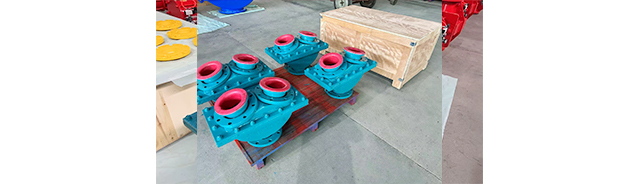
The operating principle depends on the internal configuration:
|
Configuration |
Function |
Flow Path |
|
L-Port (Diverter) |
Switches flow from common inlet to either outlet A or outlet B |
Common → A (B closed); Common → B (A closed) |
|
T-Port (Mixing/Distributing) |
Combines flow from two inlets to common outlet, or diverts common inlet to both outlets simultaneously |
Common → A + B (mixing/distribution) |
At WEIZIDOM, our Three-way Directional Valves are manufactured to API 599 and GB/T 26144 design standards with strict quality control, ensuring reliable, long-lasting performance for slurry conveying and distribution, tailings treatment, sintering dust removal systems, and other demanding mining applications.
Main Function in Mining Industry
In the mining industry, the Three-way Directional Valve serves as a versatile flow diversion and selection device for slurries, tailings, mud, and low-concentration acid/alkali solutions.
Its primary functions include:
|
Function |
Description |
|
Slurry Conveying & Distribution |
Directs slurry flow from a single source (e.g., mill discharge, thickener underflow) to one of two destinations (e.g., multiple cyclones, storage tanks, or processing lines) — enables flexible routing without re-piping. |
|
Tailings Line Switching |
Selectively directs tailings slurry to different disposal points (e.g., alternating tailings dams or storage cells) — allows one tailings line to serve multiple deposition areas. |
|
Sintering Dust Removal System Switching |
Switches dust-laden gas flow between multiple baghouse compartments or scrubber trains — enables maintenance on one system while the other remains in service. |
|
Alternating Feed to Processing Equipment |
Alternates feed between two parallel processing units (e.g., flotation cells, thickeners, filters) — provides continuous operation during maintenance or standby switching. |
|
Low-Concentration Acid/Alkali Solution Distribution |
Directs dilute acid or alkali solutions (e.g., leach solutions, neutralization reagents) to multiple injection points — enables controlled chemical distribution in mineral processing circuits. |
|
Sludge & Mud Flow Selection |
Switches sludge or mud flow between different dewatering devices or disposal lines — provides operational flexibility in tailings and water treatment circuits. |
Typical applications within slurry conveying and distribution, tailings treatment, sintering dust removal systems include:
|
Application Field |
Specific Use |
|
Slurry Conveying |
Mill discharge distribution, cyclone feed switching, concentrate line routing |
|
Tailings Treatment |
Tailings dam cell alternation, thickened tailings distribution, disposal line switching |
|
Sintering Dust Removal |
Baghouse compartment isolation, scrubber train selection, dust return lines |
|
Mineral Processing |
Flotation cell feed alternation, thickener feed distribution, filter feed switching |
|
Water & Sludge Treatment |
Sludge line selection, thickener overflow distribution, recycle water routing |
|
Chemical Leaching |
Leach solution distribution to multiple heap leach pads or agitated tanks |

Operation Configurations — L-Port vs. T-Port
|
Configuration |
Ports |
Function |
Typical Application |
|
L-Port (Diverter) |
3 ports (common + 2 outlets) |
Common inlet diverts to EITHER outlet A OR outlet B (one outlet closed at all times) |
Slurry distribution to alternating destinations (tailings dam cells, multiple processing lines) |
|
T-Port (Mixing / Distributing) |
3 ports (common + 2 outlets/inlets) |
Common port can flow to BOTH outlets simultaneously; OR combine flow from two inlets to common outlet |
Mixing reagents, combining flows, or distributing to multiple destinations |
For most mining slurry and tailings applications requiring flow diversion to alternating destinations, L-port configuration is standard.
Material Selection Guide
|
Body Material |
Best For |
Key Characteristics |
|
WCB |
General slurry, tailings, mud — neutral pH |
Carbon steel — cost-effective, good strength, requires rubber lining or corrosion protection |
|
CF8 (SS304) |
Mildly corrosive slurries, low-concentration acids/alkalis |
18Cr-8Ni stainless steel — good general corrosion resistance |
|
CF8M (SS316) |
Acidic or caustic slurries, chloride-containing solutions |
18Cr-10Ni-2Mo — molybdenum improves chloride/pitting resistance |
|
Rubber Material |
Best For |
Temperature Range |
Key Characteristics |
|
NR (Natural Rubber) |
Abrasive slurries, sand, mud, tailings |
-50°C to +80°C |
Excellent abrasion resistance, good elasticity, bubble-tight sealing |
For highly abrasive mining slurries (ore slurry, tailings, sand), NR (Natural Rubber) lining/seats provide optimal wear resistance.
Mining Applications — Typical Use Cases
|
Application |
Valve Size |
Body Material |
Rubber Material |
Function |
|
Tailings Dam Cell Switching |
DN200–DN800 |
WCB |
NR |
Alternate tailings flow between multiple disposal cells |
|
Mill Discharge Distribution |
DN150–DN400 |
WCB/CF8M |
NR |
Direct slurry to different cyclone clusters |
|
Sintering Dust Removal |
DN100–DN300 |
WCB |
NR |
Switch dust-laden gas between baghouse compartments |
|
Thickener Feed Selection |
DN100–DN250 |
WCB/CF8M |
NR |
Alternate feed between parallel thickeners |
|
Leach Solution Distribution |
DN80–DN200 |
CF8M |
NR |
Distribute dilute acid solution to heap leach pads |
|
Sludge Line Switching |
DN80–DN250 |
WCB |
NR |
Route sludge to different dewatering devices |
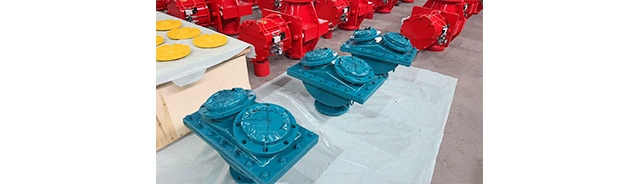
Simplify Your Flow Control with Three-Way Directional Valves
The Three-Way Directional Valve is the ultimate problem-solver for complex flow routing in mining and industrial applications. By replacing multiple two-way valves, tees, and intricate piping with a single, robust unit, it significantly reduces installation costs, saves space, and minimizes potential leak paths. Its self-cleaning, quarter-turn operation ensures reliable performance even in abrasive and corrosive environments.
To ensure the best results for your specific application, keep these selection criteria in mind:
Choose L-Port for standard flow diversion (switching flow to either outlet A or B), which is ideal for alternating tailings dam cells or routing slurry to different processing lines.
Choose T-Port for mixing or distributing flow to both outlets simultaneously, perfect for reagent mixing or combining flows.
Select the Right Material: Use WCB for general neutral slurries and tailings, CF8/CF8M stainless steel for acidic or caustic solutions, and always ensure NR (Natural Rubber) lining or seats for highly abrasive media like ore slurries and sand.
At WEIZIDOM, our Three-Way Directional Valves are manufactured to strict API 599 and GB/T 26144 standards, with sizes from DN50 to DN800 to meet the demands of any mining project.
Don't let complex piping slow down your operations.
Contact WEIZIDOM today to discuss your flow control challenges, request a technical consultation, or get a customized quote for your next project.
