

- Gate valve
-
- BS5163 rising stem soft seal gate valveDN1000 Extension stem double flange soft seal gate valveWEIZIDOMDIN F4 resilient seated gate valveDN450-1200 Resilient Seated Gate ValveDIN F5 resilient seated gate valveSocket connection soft seal gate valveWEIZIDOMUnderground cap soft seal gate valveHard seal gate valveAPI slab Gate ValveStainless steel flange gate valveWafer knife gate valvePneumatic gate valveSoft seal gate valveExtension stem gate valveUL/FM fire protection groove ends gate valveRising stem forged steel gate valvecarbon steel gate valveStainless steel threaded gate valveDIN soft seal gate valveANSI soft sealing gate valve 200PSICast iron gate valveBS resilient seated gate valve
- Butterfly valve
-
- DN900 pneumatic triple eccentric hard seal butterfly valveD643H Triple Eccentric Butterfly ValveD343H Hard seal butterfly valveMulti standard EPDM seated butterfly valveSingle flange butterfly valveDN2000 Double eccentric butterfly valveFlange butterfly valveLug butterfly valveWafer butterfly valve with handleWorm gear operated butterfly valveWafer lined fluorine butterfly valveStainless steel wafer butterfly valveStainless steel flanged butterfly valveThree eccentric flange butterfly valvePneumatic flanged butterfly valvePneumatic wafer butterfly valveTriple eccentric butterfly valve wafer typeWafer butterfly valve ULC approvedInflatable seat butterfly valveHigh performance butterfly valveGrooved end butterfly valveElectric soft seal butterfly valveFlange fluorine lined butterfly valveHandle aluminum butterfly valveWorm Gear Aluminum Butterfly ValveFull PTFE lined butterfly valve wafer typeOne stem no-pin wafer butterfly valveMulti standard aluminum stem butterfly valveStainless Steel wafer Butterfly ValveAluminium handle operated lug butterfly valveLever Operated Flange Butterfly ValveButterfly valve stemButterfly valve discButterfly valve seat
- Ball valve
-
- DN1400 top-mounted eccentric semi-ball valveFlanged three-way ball valveFully welded ball valveNatural gas ball valveHigh platform flange ball valve1 PC ball valveFixed ball valvePTFE seat flanged ball valveMetal seat ball valveAPI 6D ball valve3 Piece ball valveFull Bore 3 way ball valve L-Port3 Way T-Port ball valve2PC Ball valve female thread stainless steel
- Globe Valve
-
- API Carbon Steel Globe ValveBellows Globe ValveStainless steel flange globe valveStainless steel thread S type globe valveStainless steel thread B type globe valveCast Steel Globe ValvePiston Globe ValveWCB Carbon Steel Globe Check Valveelectric motorized control stainless steel SS316 globe valveBrass Globe ValveCryogenic Globe valveHT200 Globe ValveThreaded Stainless Steel Globe ValveGG25 Globe ValveANSI API Cast Steel And Stainless Steel Globe valve
- Check valve
-
- Rubber seal check valveDN800 Slow closing check valveDN800 Rubber Disc Check ValveButterfly Buffering Check Valvecheck valve with counter weightSilent Check ValveWCB Swing check valveSwing Check ValveSingle Chip Check Valve H74WStainless Steel Wafer Check ValveSwing Start Check ValveFoot check valveAPI Swing Check ValveDIN Flange check valveSingle plate check valveLifting Check ValveBottom ValveHammer Diminish Noises Check ValveWafer Check ValveWafer dual plate check valve
- Control valve
-
- Static Balancing ValveCage Guided Sleeve Globe Control ValveDN1000 Piston Flow Regulating ValveDN1600 Electric Actuator Flow Regulating ValvePneumatic Flanged Butterfly ValvePneumatic Wafer Butterfly ValveAngle Seat ValvePneumatic gate valveElectric three-way control valveElectric sleeve control valve
- Water Meter
-
- Vertical Type Water MetersStainless steel threaded water meterPiston water meterPlastic water meterMore flow rotor dry water meterspiral vane flange water meterCI wotlman water meter with pulse outputLXCLG(R) Vertical removable element woltman cold (hot) water meterSingle flow rotor dry water meterPrepaid Token Water MeterElectromagnetic flowmeterRotary Piston Liquid Sealed Water MeterRotary Piston Liquid Sealed Water Meter
- Air valve
-
- Double ball exhaust valveDoubleair Air Valve SaudiDoubleair Air Valve Southeast AsiaDoubleair Air Valve South AmericaDouble Air ValveThreaded Air ValveSingle Air ValveTriple Functions Air ValveAutomatic Air Release ValveAutomatic release valveAutomatic exhaust valveComposite Exhaust Air ValveBrass exhaust valveDouble Ball Air Valve
- Pipe Repair & Coupling
-
- Flexible Multi-Function Pipe Coupling ZFJ-SSS Semi-Circle Pipe Repair Clamp SJW-HDuctile Iron Band Repair ClampStainless Steel Band Repair ClampDouble-Section Pipe Repair CouplingFolding Type Pipe RepairSingle-Section Multi-Function Pipe Coupling MF-SGear-Ring Type Multi-Function Pipe Coupling GR-SZBW Damping Corrugated Hose
- Dismantling Joint
-
- VSSJAFC(CC2F) Detachable Flange Transmission JointVSSJA-2(B2F) Double Flange Limited Expansion JointVSSJA-1(BF) Single Flange Limited Expansion JointVSSJA(AF) Flange Loose Expansion JointJGD-B Threaded Rubber JointZBW Damping Corrugated HoseKXT-S Flexible Dual-Spherical Rubber JointKXT Rubber Soft JointFlange Adaptor
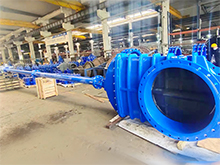
Why Is the Water Meter Running When No Water Is Being Used
2026-04-28
Why Is the Water Meter Running When No Water Is Being Used? Complete Troubleshooting & Meter Selection Guide
Have you ever walked past your water meter and noticed the needle or dial spinning steadily—even when every faucet is off, no appliances are running, and no water is being used anywhere in your home or building? This common, confusing problem affects millions of households and properties worldwide. Not only does it cause unnecessary worry, but it can also lead to inflated water bills, hidden water waste, and even long-term damage to your plumbing system.
Many property owners mistakenly assume the water meter itself is defective, but in most cases, the issue stems from leaks, air in pipes, or unstable water pressure. In this comprehensive guide, we explain exactly why your water meter runs when not in use, teach you how to judge whether a water meter is working normally, walk you through step-by-step checks and fixes, and help you choose the right water meter for long-term reliability.
How Does a Water Meter Work?
Before diving into troubleshooting, it helps to understand the basic mechanics of a standard water meter. A typical mechanical water meter uses water flow to rotate an internal impeller, which connects to a series of precision gears. These gears drive the display dials or digital counter that records total water consumption.
Most water meters have a small red or black test hand/gear—this is the most sensitive part of the meter. Even tiny flows that you cannot see or hear will make this gear move. If this indicator moves when all water sources are shut off, your system has an unseen flow or pressure-related issue. Digital water meters work similarly, using flow sensors to transmit usage data, with a low-flow indicator that signals minimal water movement. Understanding this basic function is the first step to identifying both system problems and meter malfunctions.

How to Judge If Your Water Meter Is Working Properly
Before assuming a spinning meter is caused by external plumbing issues, it is critical to verify that the water meter itself is functioning normally. A faulty or damaged meter can also produce abnormal readings, so performing simple accuracy and functionality tests can save you time and avoid unnecessary repairs.
1. Static Zero Test (No-Water Usage Test)
This is the most basic and important test to check meter normality.
- Close all water valves in the property, including faucets, toilet inlet valves, washing machine and dishwasher water supply valves, and outdoor irrigation systems.
- Wait for 10–15 minutes to ensure all residual water flow in the pipes stops completely.
- Observe the meter’s sensitive indicator (red needle or digital flow icon).
- Normal condition: The indicator remains completely stationary, and the numerical reading does not change at all.
- Abnormal condition: The indicator spins continuously or jumps irregularly, which may mean a system leak or meter failure.
2. Actual Water Flow Comparison Test
This test verifies if the meter accurately measures real water usage.
- Prepare a container of known volume, such as a 10-liter or 20-liter calibrated bucket.
- Turn off all other water sources and only use water to fill the container.
- Record the water meter reading before and after filling the container.
- Compare the metered volume with the actual volume of the container.
- Normal condition: The difference between the metered value and actual volume is within the allowable error range (usually ±2% for standard household meters).
- Abnormal condition: The meter records significantly more or less water than the actual volume, indicating internal gear wear, sensor failure, or measurement inaccuracy.
3. Check for Physical Damage or Abnormal Sounds
- Visually inspect the meter casing for cracks, water seepage, corrosion, or deformation, which can damage internal components and cause faulty readings.
- Listen for unusual grinding, rattling, or continuous whirring sounds from the meter when no water is used—these noises often signal broken impellers, stuck gears, or internal damage.
- For digital meters, check if the screen displays normally, free of flickering, error codes, or complete blackouts, which indicate electronic system failure.
4. Long-Term Usage Consistency Check
Review your water consumption records over 2–3 months.
- Normal condition: Water usage remains relatively stable, with no sudden unexplained spikes or drops.
- Abnormal condition: Usage surges dramatically without changes in household habits, or drops to zero even with regular water use—both can signal a malfunctioning meter.
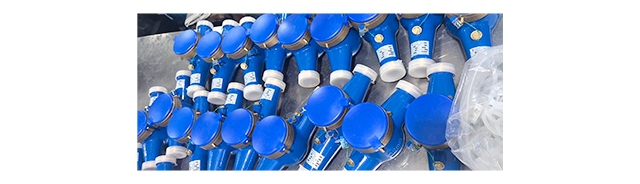
If all tests show normal results but the meter still runs without water usage, the problem lies in the plumbing system rather than the meter itself. If the meter fails these tests, it may need calibration or replacement.
Why Is My Water Meter Spinning When No Water Is Used?
After confirming the meter is working properly, a spinning dial when idle almost always stems from three core issues:
- Leaking fixtures or appliances (especially toilets)
- Hidden pipe leaks (walls, floors, underground)
- Air trapped inside pipes or unstable water pressure
Below, we break down each cause, how to test for it, and how to fix it.
Case 1: Leaking Water-Using Appliances
Appliances that hold and release water are the most frequent cause of a spinning water meter, and these leaks are often silent enough to go unnoticed for weeks.
Toilets: The #1 Hidden Leak Culprit
Toilet leaks are responsible for over 60% of unexplained water meter movement in residential properties.
Common causes include:
1. Stuck or jammed flush buttons/levers that keep the valve slightly open
2. Worn, cracked, or misaligned flapper seals at the flush outlet
3. Malfunctioning float valves that fail to shut off water, causing constant overflows
4. Continuous slow seepage from the tank to the bowl with no audible sound
How to Check for Toilet Leaks
- Listening Test: Close the bathroom door and listen carefully. A faint but constant “running water” sound almost always means a leak.
- Food Coloring Test: Add a few drops of food coloring or ink to the toilet tank. Do not flush. Wait 10–15 minutes. If colored water appears in the bowl without flushing, you have a confirmed leak.
How to Fix Toilet Leaks
- Ensure the flush button or lever returns to its original position and is not stuck.
- Adjust the float or water level limiter so water stops at the marked line inside the tank.
- Replace worn flappers, seals, or faulty fill valves—these are inexpensive parts that resolve most leaks.
- If problems continue, contact a professional plumber or the toilet manufacturer.
Other Appliances to Check
Don’t stop at toilets. Also inspect:
- Washing machine inlet hoses and drain lines for small drips
- Dishwasher connections and door seals
- Solar water heaters, expansion tanks, and hot water circulation systems
- Outdoor faucets, irrigation systems, and garden hoses
Even a slow drip of one drop per second can waste nearly 3,000 gallons of water per year, enough to keep your water meter turning continuously.
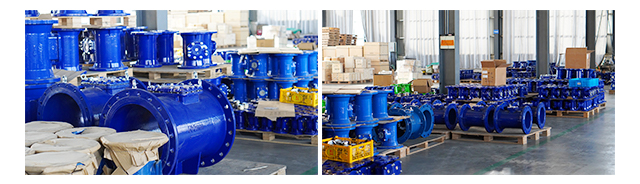
Case 2: Hidden Leaks in Water Pipes
Visible pipe leaks are easy to spot, but hidden leaks inside walls, under floors, or underground can go undetected for months, leading to mold growth, structural damage, and sky-high water bills.
How to Check for Hidden Pipe Leaks
1. Turn off **all faucets** and **all water-using appliances** completely.
2. Disable any automatic systems such as irrigation timers, ice makers, or water softeners.
3. Return to your main water meter and observe the small test gear or needle.
4. If the meter still moves forward steadily, you almost certainly have a hidden leak in the pipeline.
How to Fix Hidden Leaks
- Minor visible leaks can sometimes be tightened or patched temporarily with seal tape.
- For leaks inside walls, under concrete slabs, or underground, call a licensed plumber to locate and repair the leak using pressure testing or acoustic leak detection equipment.
- Ignoring hidden leaks will only worsen over time, leading to far more expensive repairs and excessive water costs.
Case 3: Air Trapped in Pipes & Water Pressure Fluctuations
Not all meter movement comes from actual water loss. Air pockets and unstable municipal water pressure can create false flow readings that make the meter spin even with zero real water usage.
What Happens
When water pressure fluctuates in the line, trapped air expands and contracts, pushing small amounts of water back and forth through the meter. This movement makes the dial spin forward, then backward, or jerk irregularly, tricking the meter into recording false consumption.
Common Causes
- Sudden pressure spikes or drops from the municipal water supply
- Air trapped after pipeline repairs, new installations, or long periods of non-use
- Improper meter installation too close to valves or main water lines
- Water hammer effects from quick-closing valves in appliances
How to Check
Watch the meter dial closely. If it moves unevenly, hesitates, reverses direction, or twitches randomly, you likely have air or pressure issues—not a genuine leak.
How to Fix Air & Pressure Problems
1. Close the main valve before the water meter.
2. Open all faucets downstream to release trapped air from the pipes.
3. Reopen the main valve slowly and let water run for 1–2 minutes to fully purge air.
4. Install a check valve or pressure regulator to stabilize pressure and prevent false readings.
5. For vacant properties, shut off the main valve during long absences to avoid pressure-related movement.
6. If the problem continues, consult a professional plumber to assess the system.
When to Call a Professional
If you have completed all the above checks, confirmed the water meter is working normally, and the dial still spins when no water is used, it is time to call an expert. Persistent movement may signal:
- A serious underground or concrete slab leak
- Advanced pipeline corrosion or damage
- Improper meter sizing or incorrect installation
- Complex pressure system issues requiring professional adjustment
Early intervention saves water, reduces utility costs, and prevents costly structural damage to your property.
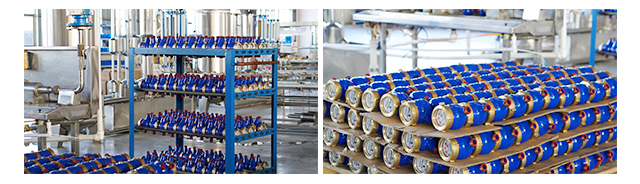
Complete Water Meter Selection Guide: Threaded & Flanged Types
Once you’ve resolved leaks or pressure issues, choosing a high-quality, correctly matched water meter helps ensure accurate readings, long service life, and fewer false movements. Below is a detailed comparison of the five most widely used water meter types: brass threaded, plastic threaded, stainless steel threaded, ductile iron flanged, and stainless steel flanged meters.
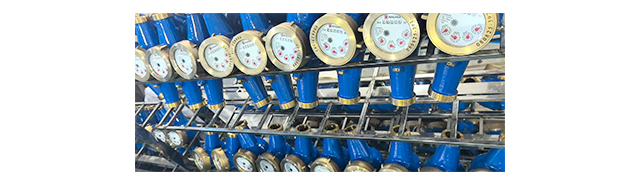
1. Brass Threaded Water Meter
Best for: Residential homes, apartments, small commercial buildings, indoor installations
Advantages
- Excellent corrosion resistance for standard tap water conditions
- Good mechanical strength and long service life
- Hygienic, lead-free options available that are safe for drinking water
- Easy threaded installation compatible with standard household pipes
- Resists mild temperature changes and minor physical impact
Limitations
- Higher cost than plastic or basic iron meters
- Not ideal for highly corrosive or chemically aggressive water
- Mostly available in small to medium diameters (DN15–DN50)
Typical Applications
- Household cold and hot water systems
- Multi-family residential buildings
- Light commercial facilities
- Renovation and retrofitting projects
2. Plastic Threaded Water Meter
Best for: Budget-focused projects, temporary setups, large-scale residential housing
Advantages
- Lightweight and extremely low cost
- Completely rust-proof and corrosion-resistant
- Resistant to mineral scaling inside the pipeline
- Easy to transport and install without heavy tools
- Good insulation and non-conductive properties
Limitations
- Lower structural strength; can crack under heavy impact
- Sensitive to high temperatures and long-term UV exposure
- Not suitable for high-pressure industrial water lines
- May deform slightly over decades under constant pressure
Typical Applications
- Low-budget housing developments
- Temporary construction site water systems
- Non-potable cold water systems
- Indoor installations protected from sunlight and physical damage
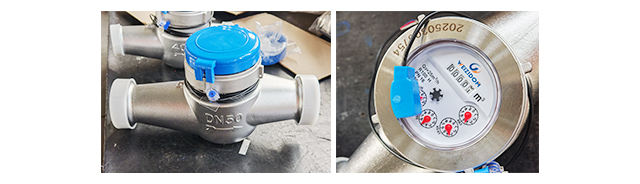
3. Stainless Steel Threaded Water Meter
Best for: High-hygiene, corrosive environments, long-life requirement projects
Advantages
- Superior corrosion resistance (especially 304/316 stainless steel)
- Extremely hygienic; no heavy metal leaching into drinking water
- Smooth interior resists biofilm formation and mineral scaling
- High pressure and temperature tolerance
- Service life often matches the overall lifespan of the building
Limitations
- Highest material cost among common threaded water meters
- Heavier than plastic or brass meters
- May require specialized tools for secure installation
Typical Applications
- Food and beverage processing factories
- Hospitals, laboratories, and clean water systems
- Coastal or high-corrosive water quality conditions
- High-end residential and commercial buildings
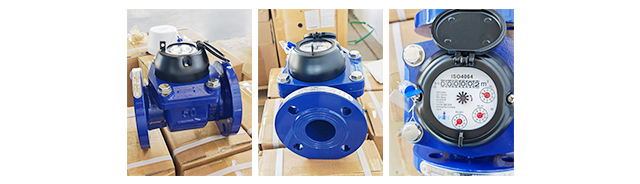
4. Ductile Iron Flanged Water Meter
Best for: Municipal pipelines, industrial systems, large-diameter main water lines
Advantages
- Ultra-high strength and exceptional durability
- Excellent resistance to external pressure and soil load for underground use
- Cost-effective for large sizes (DN50 and above)
- Good mechanical stability for long-distance water supply
- Epoxy coating available for enhanced external corrosion protection
Limitations
- Heavier and more difficult to handle manually
- Requires flanged connections and professional installation
- Needs proper coating to avoid external rust in moist underground environments
Typical Applications
- Urban public water supply networks
- Industrial plant main water lines
- Underground utility pipelines
- Agricultural irrigation systems
5. Stainless Steel Flanged Water Meter
Best for: Heavy-duty industrial, high-purity, high-corrosion harsh environments
Advantages
- Maximum corrosion and pressure resistance
- Zero contamination risk for critical water systems
- Extremely rugged design for long-term industrial use
- Low maintenance requirements and long service intervals
- Suitable for both hot and cold aggressive water fluids
Limitations
- Premium pricing compared to other flanged meters
- Specialized flange installation and professional fitting required
- Mostly used in large, high-demand industrial or municipal systems
Typical Applications
- Chemical, pharmaceutical, and electronics manufacturing
- Coastal and offshore water supply systems
- High-purity process water circuits
- Municipal water treatment plants
How to Choose the Right Water Meter
Use this quick decision framework to pick the best meter for your needs:
1. Size & Connection: Small indoor residential lines → threaded connection; large municipal/industrial main lines → flanged connection.
2. Water Quality: Standard tap water → brass or plastic; corrosive or ultra-clean water → stainless steel.
3. Pressure & Location: Underground/municipal use → ductile iron; indoor/residential use → brass or plastic.
4. Budget & Lifespan: Short-term/temporary projects → plastic; long-term investment → stainless steel.
5. Certifications: Always choose meters certified to ISO 4064 or local national standards for accuracy and safety.
A water meter that runs when no water is used is rarely a mystery—and it is almost never a defective meter. By first verifying that your water meter is working properly through simple static and flow tests, you can rule out meter faults and focus on real plumbing issues like hidden leaks, air in pipes, or pressure fluctuations. Solving these problems quickly not only lowers your water bills but also protects your property from long-term damage.
Equally important is using a properly sized, high-quality water meter matched to your plumbing system. Whether you need a compact brass threaded meter for your home or a heavy-duty ductile iron flanged meter for industrial use, selecting the right type ensures accurate readings, stable performance, and years of trouble-free service.
If you still have questions or need professional support, contact a licensed plumber or trusted water meter supplier for a full system evaluation.
Frequently Asked Questions (FAQs)
Does a water meter need a filter to work properly?
Most household and industrial water meters perform better with a proper strainer or filter installed upstream. Sediment, sand, and debris in the water can scratch internal impellers, jam gears, and cause inaccurate readings or premature failure. Installing a simple filter helps extend meter life and maintain stable measurement.
Can high water pressure damage my water meter?
Yes, excessively high water pressure can damage water meters. Overly high pressure may deform internal components, cause water hammer, accelerate seal wear, and even lead to cracked meter housings. It can also make the meter spin irregularly or give false readings when no water is being used. A pressure regulator is strongly recommended if supply pressure is too high.
What is the difference between a cold water meter and a hot water meter?
Cold water meters are designed for temperatures usually up to 30°C–40°C, using materials like standard brass or plastic. Hot water meters use heat-resistant materials and seals to withstand 70°C–90°C, preventing deformation and ensuring accuracy at high temperatures. Using a cold water meter for hot water will quickly damage it and cause incorrect readings.
How do I prevent my water meter from spinning due to air in the pipes?
To prevent false flow caused by air, regularly bleed air from faucets and high points in the pipeline after pipe repairs or long disuse. Installing an automatic air vent valve and a check valve near the meter can also stabilize flow and stop water from moving back and forth. Keeping water pressure steady further reduces meter jumping caused by air pockets.
Whether you need valves for reservoirs, pumping stations, irrigation systems, or flood control projects, we offer customized solutions to meet your needs.
For technical specifications, pricing, or custom valve solutions for your water conservancy project, contact
Eileen via WhatsApp:
WhatsApp:+86 13849184495
Email: eileen@wsdsolution.com
Pre : Oil & Gas Pipeline Valve Solutions
Next : Back To List
