

- Gate valve
-
- BS5163 rising stem soft seal gate valveDN1000 Extension stem double flange soft seal gate valveWEIZIDOMDIN F4 resilient seated gate valveDN450-1200 Resilient Seated Gate ValveDIN F5 resilient seated gate valveSocket connection soft seal gate valveWEIZIDOMUnderground cap soft seal gate valveHard seal gate valveAPI slab Gate ValveStainless steel flange gate valveWafer knife gate valvePneumatic gate valveSoft seal gate valveExtension stem gate valveUL/FM fire protection groove ends gate valveRising stem forged steel gate valvecarbon steel gate valveStainless steel threaded gate valveDIN soft seal gate valveANSI soft sealing gate valve 200PSICast iron gate valveBS resilient seated gate valve
- Butterfly valve
-
- DN900 pneumatic triple eccentric hard seal butterfly valveD643H Triple Eccentric Butterfly ValveD343H Hard seal butterfly valveMulti standard EPDM seated butterfly valveSingle flange butterfly valveDN2000 Double eccentric butterfly valveFlange butterfly valveLug butterfly valveWafer butterfly valve with handleWorm gear operated butterfly valveWafer lined fluorine butterfly valveStainless steel wafer butterfly valveStainless steel flanged butterfly valveThree eccentric flange butterfly valvePneumatic flanged butterfly valvePneumatic wafer butterfly valveTriple eccentric butterfly valve wafer typeWafer butterfly valve ULC approvedInflatable seat butterfly valveHigh performance butterfly valveGrooved end butterfly valveElectric soft seal butterfly valveFlange fluorine lined butterfly valveHandle aluminum butterfly valveWorm Gear Aluminum Butterfly ValveFull PTFE lined butterfly valve wafer typeOne stem no-pin wafer butterfly valveMulti standard aluminum stem butterfly valveStainless Steel wafer Butterfly ValveAluminium handle operated lug butterfly valveLever Operated Flange Butterfly ValveButterfly valve stemButterfly valve discButterfly valve seat
- Ball valve
-
- DN1400 top-mounted eccentric semi-ball valveFlanged three-way ball valveFully welded ball valveNatural gas ball valveHigh platform flange ball valve1 PC ball valveFixed ball valvePTFE seat flanged ball valveMetal seat ball valveAPI 6D ball valve3 Piece ball valveFull Bore 3 way ball valve L-Port3 Way T-Port ball valve2PC Ball valve female thread stainless steel
- Globe Valve
-
- API Carbon Steel Globe ValveBellows Globe ValveStainless steel flange globe valveStainless steel thread S type globe valveStainless steel thread B type globe valveCast Steel Globe ValvePiston Globe ValveWCB Carbon Steel Globe Check Valveelectric motorized control stainless steel SS316 globe valveBrass Globe ValveCryogenic Globe valveHT200 Globe ValveThreaded Stainless Steel Globe ValveGG25 Globe ValveANSI API Cast Steel And Stainless Steel Globe valve
- Check valve
-
- Rubber seal check valveDN800 Slow closing check valveDN800 Rubber Disc Check ValveButterfly Buffering Check Valvecheck valve with counter weightSilent Check ValveWCB Swing check valveSwing Check ValveSingle Chip Check Valve H74WStainless Steel Wafer Check ValveSwing Start Check ValveFoot check valveAPI Swing Check ValveDIN Flange check valveSingle plate check valveLifting Check ValveBottom ValveHammer Diminish Noises Check ValveWafer Check ValveWafer dual plate check valve
- Control valve
-
- Static Balancing ValveCage Guided Sleeve Globe Control ValveDN1000 Piston Flow Regulating ValveDN1600 Electric Actuator Flow Regulating ValvePneumatic Flanged Butterfly ValvePneumatic Wafer Butterfly ValveAngle Seat ValvePneumatic gate valveElectric three-way control valveElectric sleeve control valve
- Water Meter
-
- Vertical Type Water MetersStainless steel threaded water meterPiston water meterPlastic water meterMore flow rotor dry water meterspiral vane flange water meterCI wotlman water meter with pulse outputLXCLG(R) Vertical removable element woltman cold (hot) water meterSingle flow rotor dry water meterPrepaid Token Water MeterElectromagnetic flowmeterRotary Piston Liquid Sealed Water MeterRotary Piston Liquid Sealed Water Meter
- Air valve
-
- Double ball exhaust valveDoubleair Air Valve SaudiDoubleair Air Valve Southeast AsiaDoubleair Air Valve South AmericaDouble Air ValveThreaded Air ValveSingle Air ValveTriple Functions Air ValveAutomatic Air Release ValveAutomatic release valveAutomatic exhaust valveComposite Exhaust Air ValveBrass exhaust valveDouble Ball Air Valve
- Pipe Repair & Coupling
-
- Flexible Multi-Function Pipe Coupling ZFJ-SSS Semi-Circle Pipe Repair Clamp SJW-HDuctile Iron Band Repair ClampStainless Steel Band Repair ClampDouble-Section Pipe Repair CouplingFolding Type Pipe RepairSingle-Section Multi-Function Pipe Coupling MF-SGear-Ring Type Multi-Function Pipe Coupling GR-SZBW Damping Corrugated Hose
- Dismantling Joint
-
- VSSJAFC(CC2F) Detachable Flange Transmission JointVSSJA-2(B2F) Double Flange Limited Expansion JointVSSJA-1(BF) Single Flange Limited Expansion JointVSSJA(AF) Flange Loose Expansion JointJGD-B Threaded Rubber JointZBW Damping Corrugated HoseKXT-S Flexible Dual-Spherical Rubber JointKXT Rubber Soft JointFlange Adaptor
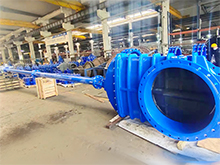
Why Stainless Steel Knife Gate Valves Are Essential for Acidic Slurries, Coal Washing & Sanitary Processes
In the harshest industrial environments—from the acidic slurry lines of a copper leaching mine to the abrasive media of a coal washing plant—standard valves fail rapidly. Metal seats erode, cavities clog with debris, and carbon steel bodies corrode away under the relentless attack of chemicals and abrasive particles. The result is a constant cycle of maintenance, costly downtime, and operational inefficiency.
To solve these problems, engineers turn to the Stainless Steel Knife Gate Valve.
Unlike conventional gate valves that rely on a wedge-shaped gate, the knife gate valve features a sharp, beveled blade that slices cleanly through fibrous materials, thick slurries, and particulate matter. But what makes this valve truly exceptional is its construction: manufactured from high-grade stainless steel (304, 316, or 316L) , it offers outstanding corrosion resistance where carbon steel would rust or contaminate the process media. Furthermore, its straight-through, full-bore design eliminates the internal cavities where solids typically accumulate, ensuring unhindered flow and reliable shut-off.
This comprehensive guide explores the working principles, key advantages, and material selection criteria for stainless steel knife gate valves. Whether you are handling acidic ore slurries, saline wastewater, or sanitary food products, understanding these characteristics will help you select the right valve to ensure long-term, trouble-free operation.
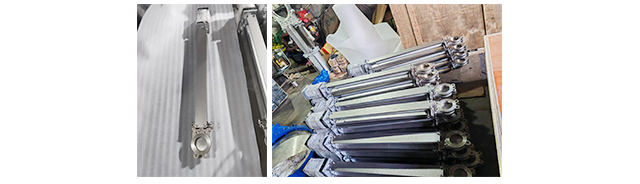
What is a Stainless Steel Knife Gate Valve?
A Stainless Steel Knife Gate Valve is a heavy-duty, manually or actuated gate valve specifically designed for shut-off and isolation of slurries, particulate matter, powders, and viscous fluids in corrosive or sanitary environments. Unlike conventional gate valves that rely on a wedge-shaped gate, the knife gate valve features a sharp, beveled gate (blade) that cuts through thick, fibrous, or particle-laden media to achieve a positive seal. The valve is constructed from stainless steel (304, 316, 316L) , providing excellent corrosion resistance for acidic, caustic, or sanitary applications where carbon steel would rust or contaminate the process media.
The operating principle is simple and robust:
* A sharp, beveled gate (the "knife") moves vertically through a packing gland that seals around the gate
* When the valve is open, the gate is fully retracted into the bonnet, creating an unobstructed, full bore flow path
* When the valve is closed, the operator (handwheel, pneumatic actuator, or electric actuator) drives the gate down through the media, cutting through solids and seating against a replaceable seat (typically UHMWPE, PTFE, or stainless steel)
* The valve has no body cavity where solids can accumulate — the gate passes through a packing chamber that is continuously purged or self-cleaning
Key characteristics of Stainless Steel Knife Gate Valves:
Sharp gate (knife edge) – Cuts through thick slurries, fibrous materials, and particulate matter
Corrosion-resistant construction – 304/316/316L stainless steel body and wetted parts
Unobstructed flow path – No body cavity — eliminates solids accumulation and plugging
Full bore design – Minimal pressure drop, allows passage of large particles
Replaceable seat – Extends valve life; can be replaced without removing the valve from the line
Manual or actuated operation – Handwheel, pneumatic, or electric actuation options
At WEIZIDOM, our Stainless Steel Knife Gate Valves are manufactured to JB/T8691-1998 design standards with strict quality control, ensuring reliable, long-lasting, corrosion-resistant performance for mining, coal washing plants, wastewater treatment plants, food processing, and other applications handling particulate matter, slurry, water, and powder.

Main Function in Mining and Industrial Applications
In mining and industrial applications, the Stainless Steel Knife Gate Valve serves as a reliable, corrosion-resistant, clog-resistant isolation device for slurries, particulate matter, powders, and viscous fluids.
Its primary functions include:
|
Function |
Description |
|
Corrosive Slurry Isolation in Mining |
Safely stops and starts the flow of acidic or caustic mineral slurries (copper leaching, gold cyanidation, nickel processing) — the stainless steel construction and corrosion-resistant seats provide long service life where carbon steel would rapidly corrode. |
|
Coal Washing Plant Slurry Control |
Handles coal slurry, magnetite slurry, and refuse lines — the sharp knife edge cuts through thick, solids-laden media, while stainless steel resists corrosion from chlorides and chemicals in the process water. |
|
Wastewater & Sludge Control in Corrosive Environments |
Controls flow in wastewater treatment plants handling acidic or saline wastewater — stainless steel resists pitting and crevice corrosion in aggressive environments. Cuts through rag, stringy material, and debris without jamming. |
|
Food Processing & Sanitary Applications |
Handles viscous food products, fruit pulp, vegetable slurries, and fibrous materials — 304/316 stainless steel provides cleanability, corrosion resistance, and meets food contact material requirements. Smooth, full bore flow path eliminates crevices where bacteria could grow. |
|
Powder Handling in Chemical & Mineral Processing |
Isolates flow of corrosive powders (chemical powders, mineral concentrates, salt, fertilizer) — the sharp gate cuts through compacted powder, and the absence of a body cavity prevents material packing. |
|
Corrosive Particulate & Slurry Transport |
Handles abrasive, corrosive mixtures (acidic slurries, salt slurries, chemical precipitants) — 316/316L stainless steel provides superior resistance to chlorides, acids, and caustics, while the knife gate design handles the abrasive solids. |
Typical applications within mining, coal washing plants, wastewater treatment plants, food processing, and other industries include:
|
Application Field |
Specific Use |
|
Mining & Mineral Processing |
Acidic ore slurries (copper, nickel, zinc), cyanide leach slurries (gold), tailings lines, concentrate transfer |
|
Coal Washing Plants |
Coal slurry feed, magnetite slurry, refuse lines, dense medium circuits |
|
Wastewater Treatment |
Primary/secondary sludge, grit slurry, scum lines, digester feed/discharge, saline wastewater |
|
Food Processing |
Fruit pulp, vegetable slurries, viscous sauces, dairy products, starch slurry, sanitary process lines |
|
Chemical Processing |
Chemical slurries, salt slurries, fertilizer slurries, corrosive powder handling |
|
Pulp & Paper |
Wood pulp, paper stock, white/black liquor (corrosive), sludge lines |
|
Pharmaceutical |
Sanitary process lines, CIP return, viscous product transfer |
Stainless Steel Material Selection Guide
|
Material |
Corrosion Resistance |
Best For |
Key Characteristics |
|
304 |
Good |
General corrosive service, mild acids/alkalis, food processing |
18Cr-8Ni stainless steel — cost-effective, good general corrosion resistance |
|
316 |
Excellent |
Chloride environments, saltwater, acidic slurries, chemical processing |
18Cr-10Ni-2Mo — molybdenum improves pitting and chloride resistance |
|
316L |
Excellent (superior weldability) |
Same as 316, plus welded assemblies requiring low carbon |
Low carbon version of 316 — resists carbide precipitation during welding |
For mining slurries containing chlorides (salt water processing, certain ore leach circuits), 316 or 316L is strongly recommended.
Seat Material Selection Guide
|
Seat Material |
Temperature Range |
Chemical Resistance |
Abrasion Resistance |
Shut-Off |
Best For |
|
UHMWPE |
-40°C to +80°C |
Good (resists many acids/alkalis) |
Excellent |
Bubble-tight |
Mining slurries, abrasive media, general corrosive service |
|
PTFE |
-200°C to +200°C |
Excellent (resists most chemicals) |
Fair |
Bubble-tight |
Chemical slurries, aggressive acids/caustics |
|
Stainless Steel (304/316) |
-50°C to +400°C |
Good (matching base material) |
Excellent |
Moderate (metal-to-metal) |
High temperature, abrasive service, steam |
For most mining and coal washing slurries, UHMWPE seats provide optimal abrasion resistance and bubble-tight shut-off while offering good chemical resistance.
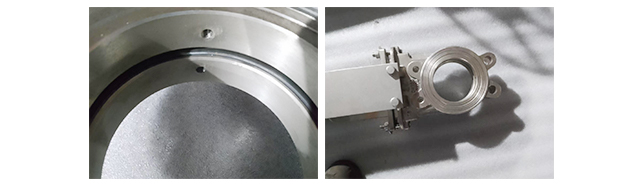
Why Stainless Steel Knife Gate Valves Are the Standard for Demanding Applications
The Stainless Steel Knife Gate Valve is more than just an isolation device—it is a critical component for ensuring safety, reliability, and efficiency in some of the world’s most demanding industries. By combining the mechanical shearing power of a knife-edge gate with the chemical resilience of 304/316/316L stainless steel, this valve solves the twin challenges of abrasive clogging and severe corrosion.
To ensure optimal performance, proper material selection is essential:
Body Material: Choose 316 or 316L for chloride-rich environments, acidic slurries, and aggressive chemical processing, as the molybdenum content prevents pitting and crevice corrosion. Use 304 for general corrosive service and food processing where mild acids/alkalis are involved.
Seat Material: For most mining and coal washing slurries, UHMWPE seats provide the best combination of abrasion resistance and bubble-tight shut-off. For high temperatures or aggressive chemicals, select PTFE or stainless steel seats.
At WEIZIDOM, our Stainless Steel Knife Gate Valves are manufactured to the rigorous JB/T8691-1998 standards, ensuring dimensional accuracy and reliable performance. With sizes ranging from DN50 to DN700 and pressure ratings of PN10/PN16, we provide the durability and corrosion resistance your project demands.
Don’t let corrosive slurries and abrasive media dictate your maintenance schedule.
Contact WEIZIDOM today to discuss your specific application, request a material selection consultation, or get a no-obligation quote for your next project.
