

- Gate valve
-
- BS5163 rising stem soft seal gate valveDN1000 Extension stem double flange soft seal gate valveWEIZIDOMDIN F4 resilient seated gate valveDN450-1200 Resilient Seated Gate ValveDIN F5 resilient seated gate valveSocket connection soft seal gate valveWEIZIDOMUnderground cap soft seal gate valveHard seal gate valveAPI slab Gate ValveStainless steel flange gate valveWafer knife gate valvePneumatic gate valveSoft seal gate valveExtension stem gate valveUL/FM fire protection groove ends gate valveRising stem forged steel gate valvecarbon steel gate valveStainless steel threaded gate valveDIN soft seal gate valveANSI soft sealing gate valve 200PSICast iron gate valveBS resilient seated gate valve
- Butterfly valve
-
- DN900 pneumatic triple eccentric hard seal butterfly valveD643H Triple Eccentric Butterfly ValveD343H Hard seal butterfly valveMulti standard EPDM seated butterfly valveSingle flange butterfly valveDN2000 Double eccentric butterfly valveFlange butterfly valveLug butterfly valveWafer butterfly valve with handleWorm gear operated butterfly valveWafer lined fluorine butterfly valveStainless steel wafer butterfly valveStainless steel flanged butterfly valveThree eccentric flange butterfly valvePneumatic flanged butterfly valvePneumatic wafer butterfly valveTriple eccentric butterfly valve wafer typeWafer butterfly valve ULC approvedInflatable seat butterfly valveHigh performance butterfly valveGrooved end butterfly valveElectric soft seal butterfly valveFlange fluorine lined butterfly valveHandle aluminum butterfly valveWorm Gear Aluminum Butterfly ValveFull PTFE lined butterfly valve wafer typeOne stem no-pin wafer butterfly valveMulti standard aluminum stem butterfly valveStainless Steel wafer Butterfly ValveAluminium handle operated lug butterfly valveLever Operated Flange Butterfly ValveButterfly valve stemButterfly valve discButterfly valve seat
- Ball valve
-
- DN1400 top-mounted eccentric semi-ball valveFlanged three-way ball valveFully welded ball valveNatural gas ball valveHigh platform flange ball valve1 PC ball valveFixed ball valvePTFE seat flanged ball valveMetal seat ball valveAPI 6D ball valve3 Piece ball valveFull Bore 3 way ball valve L-Port3 Way T-Port ball valve2PC Ball valve female thread stainless steel
- Globe Valve
-
- API Carbon Steel Globe ValveBellows Globe ValveStainless steel flange globe valveStainless steel thread S type globe valveStainless steel thread B type globe valveCast Steel Globe ValvePiston Globe ValveWCB Carbon Steel Globe Check Valveelectric motorized control stainless steel SS316 globe valveBrass Globe ValveCryogenic Globe valveHT200 Globe ValveThreaded Stainless Steel Globe ValveGG25 Globe ValveANSI API Cast Steel And Stainless Steel Globe valve
- Check valve
-
- Rubber seal check valveDN800 Slow closing check valveDN800 Rubber Disc Check ValveButterfly Buffering Check Valvecheck valve with counter weightSilent Check ValveWCB Swing check valveSwing Check ValveSingle Chip Check Valve H74WStainless Steel Wafer Check ValveSwing Start Check ValveFoot check valveAPI Swing Check ValveDIN Flange check valveSingle plate check valveLifting Check ValveBottom ValveHammer Diminish Noises Check ValveWafer Check ValveWafer dual plate check valve
- Control valve
-
- Static Balancing ValveCage Guided Sleeve Globe Control ValveDN1000 Piston Flow Regulating ValveDN1600 Electric Actuator Flow Regulating ValvePneumatic Flanged Butterfly ValvePneumatic Wafer Butterfly ValveAngle Seat ValvePneumatic gate valveElectric three-way control valveElectric sleeve control valve
- Water Meter
-
- Vertical Type Water MetersStainless steel threaded water meterPiston water meterPlastic water meterMore flow rotor dry water meterspiral vane flange water meterCI wotlman water meter with pulse outputLXCLG(R) Vertical removable element woltman cold (hot) water meterSingle flow rotor dry water meterPrepaid Token Water MeterElectromagnetic flowmeterRotary Piston Liquid Sealed Water MeterRotary Piston Liquid Sealed Water Meter
- Air valve
-
- Double ball exhaust valveDoubleair Air Valve SaudiDoubleair Air Valve Southeast AsiaDoubleair Air Valve South AmericaDouble Air ValveThreaded Air ValveSingle Air ValveTriple Functions Air ValveAutomatic Air Release ValveAutomatic release valveAutomatic exhaust valveComposite Exhaust Air ValveBrass exhaust valveDouble Ball Air Valve
- Pipe Repair & Coupling
-
- Flexible Multi-Function Pipe Coupling ZFJ-SSS Semi-Circle Pipe Repair Clamp SJW-HDuctile Iron Band Repair ClampStainless Steel Band Repair ClampDouble-Section Pipe Repair CouplingFolding Type Pipe RepairSingle-Section Multi-Function Pipe Coupling MF-SGear-Ring Type Multi-Function Pipe Coupling GR-SZBW Damping Corrugated Hose
- Dismantling Joint
-
- VSSJAFC(CC2F) Detachable Flange Transmission JointVSSJA-2(B2F) Double Flange Limited Expansion JointVSSJA-1(BF) Single Flange Limited Expansion JointVSSJA(AF) Flange Loose Expansion JointJGD-B Threaded Rubber JointZBW Damping Corrugated HoseKXT-S Flexible Dual-Spherical Rubber JointKXT Rubber Soft JointFlange Adaptor
A Comprehensive Guide to Pipe Connection Methods: Choosing the Right Way for Optimal Results
2026-02-19
Pipe connections are a critical component of water supply and drainage engineering, directly influencing the quality and longevity of the project. With rapid advancements in pipe technology, various connection methods have emerged, each with unique advantages and specific applications. Selecting the appropriate connection method is essential for engineers. Below is a detailed introduction to common pipe connection methods and their characteristics.
3. Socket Connection
Disadvantages
1. Threaded Connection
Overview
Also known as screw connections, this method involves connecting pipes or valves through internal and external threads, commonly used for steel, copper, and high-pressure pipes.
Advantages
Simple to manufacture and use, reliable connection.
Can be repeatedly disassembled and reassembled, cost-effective.
Disadvantages
Limited pressure capacity; threads are prone to corrosion and leakage.
2. Welded Connection
Overview
Welded connections involve fusing metal pipes through high temperatures, resulting in a strong and sealed joint.
Advantages
Durable, leak-proof, and requires minimal maintenance.
Saves material, improves production efficiency, and ensures high sealing performance.
Disadvantages
Welding can cause deformation and residual stress, affecting strength.
High skill requirements;
Welding defects like cracks and porosity may occur.
Welding defects like cracks and porosity may occur.
3. Socket Connection
Overview
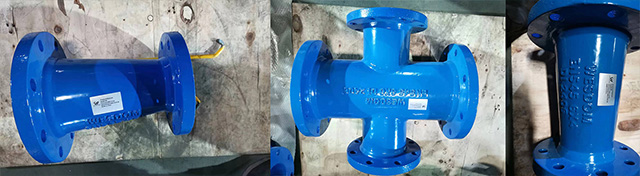
Socket connections involve inserting one pipe end into another, commonly used for cast iron, ceramic, and plastic pipes in low-pressure water systems.
Common Types and Features
Lead Joint
Advantages:
High strength and vibration resistance; no curing required.
High strength and vibration resistance; no curing required.
Disadvantages:
Expensive due to high lead consumption.
Expensive due to high lead consumption.
Asbestos Cement Joint
Advantages:
High strength, good sealing, and bonding properties.
High strength, good sealing, and bonding properties.
Disadvantages:
Labor-intensive.
Labor-intensive.
Prestressed Cement Joint
Advantages:
Low labor intensity, efficient.
Low labor intensity, efficient.
Disadvantages:
Limited to pressures ≤1.2MPa, weak seismic performance.
Limited to pressures ≤1.2MPa, weak seismic performance.
Non-Metal Pipe Socket Connection
Advantages:
Quick and easy to install.
Quick and easy to install.
Disadvantages:
Prone to separation in unstable soil conditions.
Prone to separation in unstable soil conditions.
4. Adhesive Connection
Overview
Adhesive connections use adhesives to bond identical materials for sealing, commonly applied in drainage systems.
Advantages
Simple and fast installation with low equipment costs.
Corrosion-resistant and suitable for special requirements like heat conduction and oil resistance.
Disadvantages
Limited peel strength and heat resistance (usually ≤150°C).
Difficult to inspect bonding quality non-destructively.
5. Flange Connection
Overview
Flange connections use flanges, bolts, and gaskets to create a tight seal, suitable for various pipes.
Advantages
High strength and excellent sealing properties; widely applicable.
Disadvantages
Slower assembly and higher cost.
6. Pipe Connector Connection
Overview
A modern method using stainless steel and rubber components for sealing and pressure resistance.
Advantages
Flexible, quick installation, no heat involved, durable, and versatile.
Disadvantages
May not be suitable for high-pressure applications.
7. Grooved Connection
Overview
A grooved connection involves forming grooves at pipe ends and securing them with clamps and gaskets. It’s commonly used in building and firefighting systems.
Advantages
Quick installation, maintains original pipe properties, and is easy to maintain.
Cost-effective with high system stability.
Disadvantages
High precision required for proper sealing.
8. Compression Fitting Connection
Overview
This method uses a locking nut and ferrule to secure the pipe to the fitting, commonly used in water and gas systems.
Advantages
High pressure and temperature resistance, excellent sealing, and easy maintenance.
9. Heat Fusion Connection
Overview
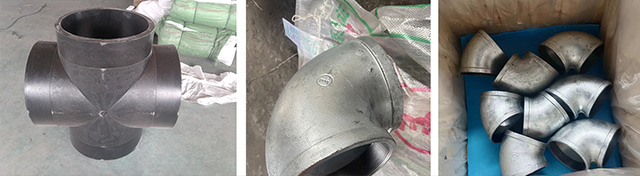
Heat fusion involves heating and melting pipe ends to form a single unit upon cooling. It’s widely used for PP-R, PE pipes, etc.
Advantages
Corrosion-resistant and durable with long service life.
Disadvantages
Uneven heating may affect the quality of the joint.
10. Electrofusion Connection
Overview
This method uses electricity to heat embedded copper wires in pipe fittings, fusing PE pipes.
Advantages
Flexible and suitable for complex scenarios.
Disadvantages
Higher cost.
11. Press Fitting Connection
Overview
Press fittings use a special tool to compress pipe fittings with sealing rings, offering a reliable and secure connection.
Advantages
Quick installation, dependable, and cost-effective.
12. Heat Shrink Connection
Overview
Heat shrink connections involve using heat shrink tubing coated with adhesive to tightly bond adjacent pipe ends, often used for insulation and waterproofing.
Advantages
Excellent insulation and anti-aging properties.
Disadvantages
More complex installation steps and slightly higher costs.
Choosing the right pipe connection method is crucial for ensuring project quality and controlling costs. Whether you’re an engineer or a project manager, mastering these methods will significantly enhance your project’s success.
