

- Gate valve
-
- BS5163 rising stem soft seal gate valveDN1000 Extension stem double flange soft seal gate valveWEIZIDOMDIN F4 resilient seated gate valveDN450-1200 Resilient Seated Gate ValveDIN F5 resilient seated gate valveSocket connection soft seal gate valveWEIZIDOMUnderground cap soft seal gate valveHard seal gate valveAPI slab Gate ValveStainless steel flange gate valveWafer knife gate valvePneumatic gate valveSoft seal gate valveExtension stem gate valveUL/FM fire protection groove ends gate valveRising stem forged steel gate valvecarbon steel gate valveStainless steel threaded gate valveDIN soft seal gate valveANSI soft sealing gate valve 200PSICast iron gate valveBS resilient seated gate valve
- Butterfly valve
-
- DN900 pneumatic triple eccentric hard seal butterfly valveD643H Triple Eccentric Butterfly ValveD343H Hard seal butterfly valveMulti standard EPDM seated butterfly valveSingle flange butterfly valveDN2000 Double eccentric butterfly valveFlange butterfly valveLug butterfly valveWafer butterfly valve with handleWorm gear operated butterfly valveWafer lined fluorine butterfly valveStainless steel wafer butterfly valveStainless steel flanged butterfly valveThree eccentric flange butterfly valvePneumatic flanged butterfly valvePneumatic wafer butterfly valveTriple eccentric butterfly valve wafer typeWafer butterfly valve ULC approvedInflatable seat butterfly valveHigh performance butterfly valveGrooved end butterfly valveElectric soft seal butterfly valveFlange fluorine lined butterfly valveHandle aluminum butterfly valveWorm Gear Aluminum Butterfly ValveFull PTFE lined butterfly valve wafer typeOne stem no-pin wafer butterfly valveMulti standard aluminum stem butterfly valveStainless Steel wafer Butterfly ValveAluminium handle operated lug butterfly valveLever Operated Flange Butterfly ValveButterfly valve stemButterfly valve discButterfly valve seat
- Ball valve
-
- DN1400 top-mounted eccentric semi-ball valveFlanged three-way ball valveFully welded ball valveNatural gas ball valveHigh platform flange ball valve1 PC ball valveFixed ball valvePTFE seat flanged ball valveMetal seat ball valveAPI 6D ball valve3 Piece ball valveFull Bore 3 way ball valve L-Port3 Way T-Port ball valve2PC Ball valve female thread stainless steel
- Globe Valve
-
- API Carbon Steel Globe ValveBellows Globe ValveStainless steel flange globe valveStainless steel thread S type globe valveStainless steel thread B type globe valveCast Steel Globe ValvePiston Globe ValveWCB Carbon Steel Globe Check Valveelectric motorized control stainless steel SS316 globe valveBrass Globe ValveCryogenic Globe valveHT200 Globe ValveThreaded Stainless Steel Globe ValveGG25 Globe ValveANSI API Cast Steel And Stainless Steel Globe valve
- Check valve
-
- Rubber seal check valveDN800 Slow closing check valveDN800 Rubber Disc Check ValveButterfly Buffering Check Valvecheck valve with counter weightSilent Check ValveWCB Swing check valveSwing Check ValveSingle Chip Check Valve H74WStainless Steel Wafer Check ValveSwing Start Check ValveFoot check valveAPI Swing Check ValveDIN Flange check valveSingle plate check valveLifting Check ValveBottom ValveHammer Diminish Noises Check ValveWafer Check ValveWafer dual plate check valve
- Control valve
-
- Static Balancing ValveCage Guided Sleeve Globe Control ValveDN1000 Piston Flow Regulating ValveDN1600 Electric Actuator Flow Regulating ValvePneumatic Flanged Butterfly ValvePneumatic Wafer Butterfly ValveAngle Seat ValvePneumatic gate valveElectric three-way control valveElectric sleeve control valve
- Water Meter
-
- Vertical Type Water MetersStainless steel threaded water meterPiston water meterPlastic water meterMore flow rotor dry water meterspiral vane flange water meterCI wotlman water meter with pulse outputLXCLG(R) Vertical removable element woltman cold (hot) water meterSingle flow rotor dry water meterPrepaid Token Water MeterElectromagnetic flowmeterRotary Piston Liquid Sealed Water MeterRotary Piston Liquid Sealed Water Meter
- Air valve
-
- Double ball exhaust valveDoubleair Air Valve SaudiDoubleair Air Valve Southeast AsiaDoubleair Air Valve South AmericaDouble Air ValveThreaded Air ValveSingle Air ValveTriple Functions Air ValveAutomatic Air Release ValveAutomatic release valveAutomatic exhaust valveComposite Exhaust Air ValveBrass exhaust valveDouble Ball Air Valve
- Pipe Repair & Coupling
-
- Flexible Multi-Function Pipe Coupling ZFJ-SSS Semi-Circle Pipe Repair Clamp SJW-HDuctile Iron Band Repair ClampStainless Steel Band Repair ClampDouble-Section Pipe Repair CouplingFolding Type Pipe RepairSingle-Section Multi-Function Pipe Coupling MF-SGear-Ring Type Multi-Function Pipe Coupling GR-SZBW Damping Corrugated Hose
- Dismantling Joint
-
- VSSJAFC(CC2F) Detachable Flange Transmission JointVSSJA-2(B2F) Double Flange Limited Expansion JointVSSJA-1(BF) Single Flange Limited Expansion JointVSSJA(AF) Flange Loose Expansion JointJGD-B Threaded Rubber JointZBW Damping Corrugated HoseKXT-S Flexible Dual-Spherical Rubber JointKXT Rubber Soft JointFlange Adaptor
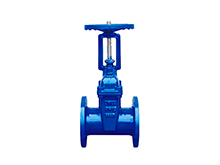
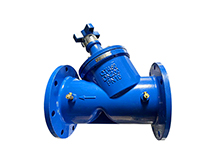
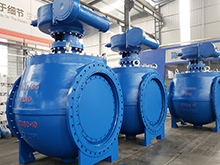
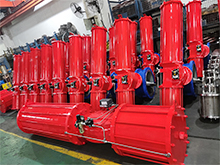
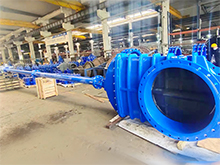
fully welded ball valve vs forged steel ball valve
A Forged Steel Ball Valve is a high-integrity, quarter-turn isolation valve manufactured from forged steel rather than cast steel. The forging process involves shaping heated steel under high pressure, which realigns the grain structure and eliminates internal voids, porosity, and impurities — resulting in a material that is significantly stronger, denser, and more reliable than cast equivalents, especially in high-pressure, high-temperature, and sour service applications containing H₂S or CO₂.
Key characteristics of Forged Steel Ball Valves:
API 6D & API 608 Compliance – Recognized standards for pipeline and industrial ball valves
Exceptional pressure capability – Rated up to Class 2500 (PN420), far exceeding typical cast ball valve limits in small diameters
Superior material integrity – Forged construction eliminates porosity, inclusions, and voids — critical for high-pressure, sour service (H₂S), CO₂, and high-cycle applications
Quarter-turn operation – 90-degree rotation from fully open to fully closed enables fast, simple operation
Bubble-tight shut-off – Resilient or metal seats provide zero leakage when closed
Compact size – Smaller and lighter than cast ball valves for the same pressure class
At WEIZIDOM, our Forged Steel Ball Valves are manufactured to API 6D and API 608 design standards with strict quality control, ensuring reliable, leak-tight performance for long-distance oil and gas pipelines, wellhead extraction, oil refining and chemical systems, and urban gas pipeline networks.
Main Function in Oil and Gas Systems
In oil and gas systems, the Forged Steel Ball Valve serves as a fast-acting, high-pressure isolation device for critical piping systems.
Its primary functions include:
|
Function |
Description |
|
Long-Distance Oil & Gas Pipeline Isolation |
Installed on transmission pipelines as mainline block valves — quarter-turn operation enables rapid emergency shutdown. Forged construction withstands high pressures (up to Class 2500) common in long-distance transmission. |
|
Oil & Gas Wellhead Extraction Isolation |
Used on wellhead Christmas trees, flow lines, and manifold systems — provides positive shut-off for well testing, maintenance, and emergency isolation in high-pressure upstream operations. Forged steel resists H₂S and CO₂ corrosion. |
|
Oil Refining & Chemical System Isolation |
Provides reliable shut-off in refineries, petrochemical plants, and chemical facilities — forged construction resists thermal cycling, hydrogen attack, and high-temperature degradation. |
|
Urban Gas Pipeline Network Isolation |
Installed on city gas distribution mains, service lines, and pressure regulating stations — compact size suits space-constrained urban installations. Quarter-turn operation enables rapid emergency response. |
|
Corrosive Media Isolation (H₂S/CO₂) |
With appropriate material selection (LF2, F304, F316 with NACE compliance), forged steel ball valves resist sulfide stress cracking (SSC) and carbon dioxide corrosion in sour gas and CO₂-containing service. |
|
High-Pressure, High-Cycle Service |
Forged construction provides superior fatigue resistance for applications requiring frequent operation — such as well testing, batch switching, and loading systems. |
Typical applications within long-distance pipelines, wellhead extraction, refining/chemical, and urban gas networks include:
|
Application Field |
Specific Use |
|
Long-Distance Pipelines |
Mainline block valves, compressor station isolation, pig launcher/receiver valves, metering station isolation |
|
Wellhead Extraction |
Christmas tree wing valves, flow line isolation, manifold valves, test headers |
|
Oil Refining & Chemicals |
Reactor feed, heat exchanger isolation, bypass lines, product transfer, flare headers |
|
Urban Gas Networks |
City gate station isolation, distribution main block valves, service line connections, regulator bypass |
|
Sour & Corrosive Service |
Sour gas gathering, CO₂ injection, acid gas handling, amine service |
Material Selection Guide for Oil and Gas Service (H₂S/CO₂)
|
Material Grade |
Best For |
Pressure/Temperature |
Key Characteristics |
|
A105 |
General oil, gas, water, steam, non-sour service |
Class 150–2500 / -29°C to +230°C |
Standard carbon steel — most common, cost-effective, good strength. Not recommended for H₂S service without NACE compliance. |
|
LF2 |
Low-temperature service, Arctic pipelines, LNG, sour service |
Class 150–2500 / -46°C to +150°C |
Low-temperature carbon steel — impact-tested for cold environments. NACE compliant available for H₂S service. |
|
F5 / F9 |
High-temperature, hydrogen service, erosion resistance |
Class 150–2500 / up to +550°C |
Chrome-moly steel — good high-temperature strength, hydrogen attack resistance. |
|
F11 / F22 |
Elevated temperature, high-pressure, refinery service |
Class 150–2500 / up to +570°C |
1.25% / 2.25% Chrome-0.5% Molybdenum — excellent high-temperature creep resistance. |
|
F304 (SS304) |
General corrosive service, oxidizing acids, moderate H₂S/CO₂ |
Class 150–2500 / -196°C to +230°C |
18Cr-8Ni stainless steel — good corrosion resistance, cryogenic capable. NACE compliant available. |
|
F316 (SS316) |
Aggressive corrosive service, chlorides, sour service (H₂S/CO₂) |
Class 150–2500 / -196°C to +230°C |
Molybdenum improves chloride/pitting resistance — preferred for sour service with H₂S and CO₂. NACE compliant available. |
*For sour service containing H₂S and/or CO₂, NACE MR0175 / MR0103 compliance is required — WEIZIDOM offers full NACE-compliant materials and manufacturing processes.*
What is a Fully Welded Ball Valve?
A Fully Welded Ball Valve is a high-integrity, maintenance-free isolation valve where the body is constructed entirely by welding — rather than using bolted or flanged connections. The ball, seats, and stem are assembled inside the body, which is then welded closed, creating a single, seamless, leak-proof structure with no body joints that could potentially leak.
The operating principle is the same as a standard ball valve:
* A hollow ball with a cylindrical bore (typically full bore) is positioned between two sealing seats
When the valve is open, the ball rotates 90 degrees so the bore aligns with the pipeline axis — allowing fluid to flow straight through
* When the valve is closed, the ball rotates 90 degrees so the solid surface blocks the flow path
* A stem connects the ball to an operator (handle, gear, or actuator)
Key characteristics of Fully Welded Ball Valves:
Leak-proof body construction – No bolted bonnet or flanged body joints — eliminates potential leak paths to the atmosphere
Full bore (full port) design – Bore diameter matches pipeline inside diameter — allows pigging and creates no pressure drop
Maintenance-free – Sealed construction prevents ingress of moisture, dirt, and corrosion — designed for buried or underground installation
Single or double block & bleed – Provides positive isolation from both upstream and downstream pressure
Cryogenic to high-temperature capability – Engineered for service from -60°C to +230°C
At WEIZIDOM, our Fully Welded Ball Valves are manufactured to API 6D and ASME B16.34 design standards with strict quality control, ensuring reliable, leak-free performance for city gas, city heating, energy, coal chemical, and other critical infrastructure applications.
Main Function in Oil and Gas Systems
In oil and gas systems, the Fully Welded Ball Valve serves as a high-integrity, maintenance-free isolation device for buried and critical pipeline applications.
Its primary functions include:
|
Function |
Description |
|
City Gas Distribution Isolation |
Installed on natural gas distribution mains and service lines — fully welded construction prevents leakage to atmosphere in buried installations, critical for safety in urban areas. |
|
City Heating Network Isolation |
Used in district heating systems to isolate pipeline sections for maintenance or emergency shutdown — welded construction withstands thermal cycling without developing leaks. |
|
Energy Pipeline Block Valves |
Provides reliable shut-off in long-distance oil, gas, and product pipelines — full bore design allows pigging operations without valve removal. |
|
Coal Chemical Plant Isolation |
Handles synthetic gas (syngas), hydrogen, and other coal chemical products — welded construction eliminates fugitive emissions of hazardous gases. |
|
Underground & Buried Service |
Designed for direct burial without valve boxes or vaults — sealed construction prevents ground moisture and corrosion from entering the valve internals. |
|
Transmission Pipeline Sectioning |
Divides long-distance pipelines into manageable segments — allows maintenance, repair, or emergency isolation without draining entire lines. |
Typical applications within city gas, city heating, energy, and coal chemical industries include:
|
Application Field |
Specific Use |
|
City Gas |
Natural gas distribution mains, service line connections, pressure regulating stations |
|
City Heating |
District heating pipeline isolation, thermal expansion management |
|
Energy Pipelines |
Long-distance oil and gas transmission, compressor station bypass |
|
Coal Chemical Industry |
Syngas lines, hydrogen service, methanol, ammonia, and other coal-derived products |
|
Cryogenic Service |
LNG storage and transfer (down to -60°C depending on material) |
|
High-Temperature Service |
Steam, hot oil, and thermal fluid systems (up to +230°C) |
Key Features & Advantages
WEIZIDOM’s Fully Welded Ball Valve is engineered specifically for critical infrastructure and buried pipeline applications, providing leak-proof, maintenance-free isolation.
Below are its outstanding features and advantages:
|
Feature |
Advantage |
|
Fully Welded, Leak-Proof Body Construction |
No bolted bonnet, no body flange gaskets — eliminates all potential leak paths to the atmosphere. Critical for natural gas distribution in urban areas, hazardous fluid service, and fugitive emission compliance. |
|
API 6D & ASME B16.34 Compliance |
Manufactured to recognized petroleum industry and pressure valve standards — ensures design integrity, material traceability, dimensional interchangeability, and rigorous testing for pipeline service. |
|
Exceptional Diameter & Pressure Range (DN15–DN1400, PN16–PN420 / Class 150–2500) |
Covers everything from small city gas service connections (DN15) to major transmission pipeline block valves (DN1400) and from medium-pressure (PN16) to ultra-high-pressure (PN420 / Class 2500) applications — a single valve family for all infrastructure needs. |
|
Full Bore (Full Port) for Piggable Pipelines |
Bore diameter matches pipeline inside diameter — allows pipeline pigs to pass through freely for cleaning, inspection, and maintenance. Creates virtually no pressure drop, reducing pumping/compression energy costs. |
|
Maintenance-Free, Buried-Ready Design |
Sealed welded construction prevents ingress of ground moisture, soil chemicals, and debris — no regular maintenance required. Extended stem options allow operation from surface level without excavation. Designed for direct burial, eliminating expensive valve vaults. |
|
Wide Temperature & Material Range (-60°C to +230°C) |
Engineered for cryogenic service (LNG, -60°C with LF2/16MnD) to high-temperature service (steam, hot oil, +230°C) — select materials to match your application. Available in A105 (carbon steel), LF2 (low-temp), 16MnD (low-temp), 304/316 (stainless), F51 (duplex), and other alloys. |
Material Selection Guide for Temperature Service
|
Material Grade |
Best For |
Temperature Range |
Key Characteristics |
|
A105 |
General oil, gas, water, steam |
-29°C to +230°C |
Standard carbon steel — most common for moderate temperatures |
|
LF2 / 16MnD |
Low-temperature service, LNG, city gas |
-46°C to +150°C |
Low-temperature carbon steel — impact-tested for cold environments |
|
304 / 304L |
Moderate corrosive service, oxidizing media |
-196°C to +230°C (cryogenic capable) |
18Cr-8Ni stainless steel — good corrosion resistance |
|
316 / 316L |
Aggressive corrosive service, chlorides |
-196°C to +230°C (cryogenic capable) |
Molybdenum improves chloride/pitting resistance |
|
F51 (Duplex) |
Sour gas, seawater, high-chloride, high strength |
-40°C to +230°C |
Excellent chloride stress corrosion resistance |
*For service below -46°C (cryogenic, LNG), consult WEIZIDOM for specialized materials and extended stem designs.*
