

- Gate valve
-
- BS5163 rising stem soft seal gate valveDN1000 Extension stem double flange soft seal gate valveWEIZIDOMDIN F4 resilient seated gate valveDN450-1200 Resilient Seated Gate ValveDIN F5 resilient seated gate valveSocket connection soft seal gate valveWEIZIDOMUnderground cap soft seal gate valveHard seal gate valveAPI slab Gate ValveStainless steel flange gate valveWafer knife gate valvePneumatic gate valveSoft seal gate valveExtension stem gate valveUL/FM fire protection groove ends gate valveRising stem forged steel gate valvecarbon steel gate valveStainless steel threaded gate valveDIN soft seal gate valveANSI soft sealing gate valve 200PSICast iron gate valveBS resilient seated gate valve
- Butterfly valve
-
- DN900 pneumatic triple eccentric hard seal butterfly valveD643H Triple Eccentric Butterfly ValveD343H Hard seal butterfly valveMulti standard EPDM seated butterfly valveSingle flange butterfly valveDN2000 Double eccentric butterfly valveFlange butterfly valveLug butterfly valveWafer butterfly valve with handleWorm gear operated butterfly valveWafer lined fluorine butterfly valveStainless steel wafer butterfly valveStainless steel flanged butterfly valveThree eccentric flange butterfly valvePneumatic flanged butterfly valvePneumatic wafer butterfly valveTriple eccentric butterfly valve wafer typeWafer butterfly valve ULC approvedInflatable seat butterfly valveHigh performance butterfly valveGrooved end butterfly valveElectric soft seal butterfly valveFlange fluorine lined butterfly valveHandle aluminum butterfly valveWorm Gear Aluminum Butterfly ValveFull PTFE lined butterfly valve wafer typeOne stem no-pin wafer butterfly valveMulti standard aluminum stem butterfly valveStainless Steel wafer Butterfly ValveAluminium handle operated lug butterfly valveLever Operated Flange Butterfly ValveButterfly valve stemButterfly valve discButterfly valve seat
- Ball valve
-
- DN1400 top-mounted eccentric semi-ball valveFlanged three-way ball valveFully welded ball valveNatural gas ball valveHigh platform flange ball valve1 PC ball valveFixed ball valvePTFE seat flanged ball valveMetal seat ball valveAPI 6D ball valve3 Piece ball valveFull Bore 3 way ball valve L-Port3 Way T-Port ball valve2PC Ball valve female thread stainless steel
- Globe Valve
-
- API Carbon Steel Globe ValveBellows Globe ValveStainless steel flange globe valveStainless steel thread S type globe valveStainless steel thread B type globe valveCast Steel Globe ValvePiston Globe ValveWCB Carbon Steel Globe Check Valveelectric motorized control stainless steel SS316 globe valveBrass Globe ValveCryogenic Globe valveHT200 Globe ValveThreaded Stainless Steel Globe ValveGG25 Globe ValveANSI API Cast Steel And Stainless Steel Globe valve
- Check valve
-
- Rubber seal check valveDN800 Slow closing check valveDN800 Rubber Disc Check ValveButterfly Buffering Check Valvecheck valve with counter weightSilent Check ValveWCB Swing check valveSwing Check ValveSingle Chip Check Valve H74WStainless Steel Wafer Check ValveSwing Start Check ValveFoot check valveAPI Swing Check ValveDIN Flange check valveSingle plate check valveLifting Check ValveBottom ValveHammer Diminish Noises Check ValveWafer Check ValveWafer dual plate check valve
- Control valve
-
- Static Balancing ValveCage Guided Sleeve Globe Control ValveDN1000 Piston Flow Regulating ValveDN1600 Electric Actuator Flow Regulating ValvePneumatic Flanged Butterfly ValvePneumatic Wafer Butterfly ValveAngle Seat ValvePneumatic gate valveElectric three-way control valveElectric sleeve control valve
- Water Meter
-
- Vertical Type Water MetersStainless steel threaded water meterPiston water meterPlastic water meterMore flow rotor dry water meterspiral vane flange water meterCI wotlman water meter with pulse outputLXCLG(R) Vertical removable element woltman cold (hot) water meterSingle flow rotor dry water meterPrepaid Token Water MeterElectromagnetic flowmeterRotary Piston Liquid Sealed Water MeterRotary Piston Liquid Sealed Water Meter
- Air valve
-
- Double ball exhaust valveDoubleair Air Valve SaudiDoubleair Air Valve Southeast AsiaDoubleair Air Valve South AmericaDouble Air ValveThreaded Air ValveSingle Air ValveTriple Functions Air ValveAutomatic Air Release ValveAutomatic release valveAutomatic exhaust valveComposite Exhaust Air ValveBrass exhaust valveDouble Ball Air Valve
- Pipe Repair & Coupling
-
- Flexible Multi-Function Pipe Coupling ZFJ-SSS Semi-Circle Pipe Repair Clamp SJW-HDuctile Iron Band Repair ClampStainless Steel Band Repair ClampDouble-Section Pipe Repair CouplingFolding Type Pipe RepairSingle-Section Multi-Function Pipe Coupling MF-SGear-Ring Type Multi-Function Pipe Coupling GR-SZBW Damping Corrugated Hose
- Dismantling Joint
-
- VSSJAFC(CC2F) Detachable Flange Transmission JointVSSJA-2(B2F) Double Flange Limited Expansion JointVSSJA-1(BF) Single Flange Limited Expansion JointVSSJA(AF) Flange Loose Expansion JointJGD-B Threaded Rubber JointZBW Damping Corrugated HoseKXT-S Flexible Dual-Spherical Rubber JointKXT Rubber Soft JointFlange Adaptor
Why are Y-type strainer irreplaceable in water systems
What is a Y-type Strainer?
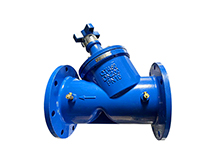
A Y-type Strainer is a mechanical filtering device installed in pipeline systems to remove solid particles, debris, and sediment from flowing water. The name derives from its distinctive Y-shaped body configuration, where the straining element is housed in an angled branch (the "leg" of the Y), allowing solids to collect without significantly restricting the main flow path.
The internal structure consists of a perforated metal screen or mesh cylinder (the strainer element) that captures particles above a specified size while allowing water to pass through. When the strainer becomes clogged with accumulated debris, the removable cover (blow-down port) can be opened to clean or replace the screen without removing the entire strainer from the pipeline.
The Y configuration offers several advantages: low pressure drop when clean, easy access for cleaning, compact design for space-constrained installations, and the ability to install in horizontal or vertical pipelines.
At WEIZIDOM, our Y-type Strainers are manufactured to DIN3202-F1, BS4504, and ANSI design standards with strict quality control, ensuring reliable debris protection for water supply and drainage systems.
Main Function in Water Systems
In water supply and drainage systems, the Y-type Strainer serves as an essential protective device that safeguards downstream equipment from damage caused by solid particles.
Its primary functions include:
|
Function |
Description |
|
Protecting Valves |
Prevents debris from jamming gate valves, butterfly valves, check valves, and control valves — extending valve life and ensuring reliable operation. |
|
Protecting Pumps |
Captures sand, grit, scale, welding slag, and other particles that could damage pump impellers, seals, and bearings — reducing pump maintenance and failure risk. |
|
Protecting Flow Meters |
Removes solids that could cause inaccurate readings, clog measurement ports, or damage sensitive meter components — ensuring accurate flow data. |
|
Protecting Water Meters |
Prevents debris from entering mechanical or electronic water meters, ensuring measurement accuracy and preventing internal damage. |
|
Protecting Sprinklers & Emitters |
In irrigation systems, strainers prevent nozzle clogging and ensure uniform water distribution. |
|
Protecting Heat Exchangers |
Removes particles that could foul heat transfer surfaces, reducing efficiency and increasing energy consumption. |
|
Removing Pipeline Debris |
During new pipeline construction or repair, welding slag, cutting chips, sand, and rust scale are common. Strainers capture this debris before it reaches sensitive equipment. |
|
Preventing Sediment Accumulation |
Captures suspended solids that would otherwise settle in low-flow areas, reducing system cleaning frequency and preventing blockages. |
|
Enabling System Commissioning |
Temporary or permanent strainers are essential during pipeline commissioning to capture construction debris before the system enters normal operation. |
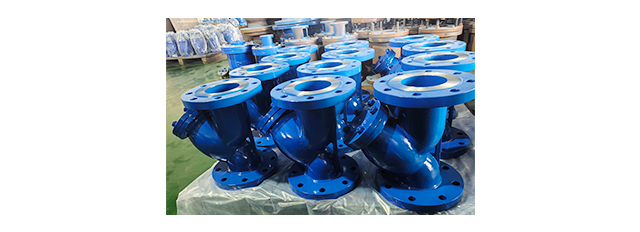
Typical applications within water supply and drainage include:
✔ Upstream of pump suction lines
✔ Upstream of control valves and pressure reducing valves
✔ Upstream of water meters and flow meters
✔ Inlet to building water supply systems
✔ Irrigation system mainlines and zone lines
✔ Industrial cooling water circuits
✔ Water treatment plant intake lines
✔ Downstream of pipeline repairs or new construction
✔ Protection of automatic control valves (solenoid valves, actuated valves)
✔ Fire protection system branch lines (protecting sprinkler heads)
Key Features & Advantages
WEIZIDOM’s Y-type Strainer is engineered specifically for water supply and drainage applications, providing effective debris protection with low maintenance requirements.
Below are its standout features:
|
Feature |
Advantage |
|
Y-Shaped Body Design |
The angled strainer branch allows solids to settle without blocking the main flow path — maintains low pressure drop while capturing debris effectively. |
|
Multiple Design Standards |
Compliant with DIN3202-F1, BS4504, and ANSI standards — suitable for projects requiring European, British, or American standard connections. |
|
Wide Diameter Range |
Available from DN50 to DN800 — covers branch lines, distribution mains, and large transmission pipelines. |
|
Ductile Iron (DI) Construction |
High-strength ductile iron body provides excellent mechanical properties, impact resistance, and durability — ideal for buried or above-ground water pipeline installations. |
|
Pressure Ratings PN10/16 |
Suitable for low to medium pressure water systems — covers typical water supply and drainage pressure ranges. |
|
Flanged End Connections |
Standard flanged ends (to DIN, BS4504, or ANSI drilling) allow secure, leak-proof connection to pipeline flanges — easy to install and remove for maintenance. |
|
Removable Stainless Steel Screen |
Perforated or mesh screen made of corrosion-resistant stainless steel — can be removed, cleaned, and replaced without cutting the pipeline. |
|
Blow-Down Port |
The bottom of the strainer branch features a removable cap or blow-down valve — allows debris to be flushed out without dismantling the strainer. |
|
Low Pressure Drop |
Optimized flow path and large screen open area minimize pressure loss when clean — reduces pumping energy costs. |
|
Large Debris Holding Capacity |
The Y-branch provides significant volume for debris accumulation — extends intervals between cleaning, reducing maintenance frequency. |
|
Transparent Cover Option |
Optional transparent cover (for smaller diameters) allows visual inspection of screen condition and debris accumulation without disassembly. |
|
Magnetic Insert Option |
Optional magnetic element can be added to capture ferrous particles (iron, steel rust) that pass through the screen — provides additional protection for pumps and meters. |
|
Dual Screen Option |
Available with two screens for applications requiring uninterrupted operation — one screen can be cleaned while the other remains in service (requires valved bypass arrangement). |
|
Corrosion Protection |
Ductile iron body with fusion-bonded epoxy coating (internal and external) provides excellent corrosion resistance for water applications. |
|
Easy Maintenance Access |
The Y-branch cover is secured with bolts or a threaded cap — simple to remove for screen cleaning or replacement. |
|
Orientation Flexibility |
Can be installed in horizontal or vertical pipelines (with flow direction appropriate for the specific orientation — consult installation instructions). |
|
Durable Screen Construction |
Stainless steel screen resists corrosion and deformation — maintains consistent mesh opening size over many cleaning cycles. |
|
Flow Direction Indication |
Arrow cast into the body indicates correct flow direction — prevents reverse installation that would bypass the straining function. |
|
Rigorous Quality Control |
Each strainer undergoes 12 tests from raw material to final product, including pressure testing, dimensional inspection, and screen integrity verification. |
Screen Mesh Selection Guide for Water Systems
|
Mesh Size (Microns / Mesh Count) |
Typical Application |
|
500 – 1000 microns (18–35 mesh) |
Coarse straining — protecting large valves, pumps handling raw water with heavy debris |
|
200 – 500 microns (35–80 mesh) |
Medium straining — general water supply, irrigation, protecting standard pumps and valves |
|
100 – 200 microns (80–150 mesh) |
Fine straining — protecting sensitive meters, control valves, sprinklers, heat exchangers |
|
50 – 100 microns (150–300 mesh) |
Very fine straining — protecting precision instruments, small orifice devices, medical water systems |
WEIZIDOM offers screens in various mesh sizes to match your specific debris protection requirements. Contact us for recommendations based on your water quality.
Why Choose WEIZIDOM’s Y-type Strainer for Your Water System?
|
Reason |
Benefit |
|
Designed Specifically for Water Supply & Drainage |
Engineered to handle the typical debris found in water pipelines — sand, rust, sediment, welding slag, pipe scale. |
|
Multiple Standard Compliance |
Meets DIN3202-F1, BS4504, and ANSI standards — one supplier for projects requiring different regional standards. |
|
Wide Diameter Coverage |
DN50 to DN800 — suitable for everything from building service lines to large municipal mains. |
|
Protects Your Downstream Investment |
A relatively low-cost strainer prevents expensive damage to pumps, valves, meters, and other equipment — rapid return on investment. |
|
Low Maintenance Design |
Y-branch design provides large debris holding capacity and easy access for cleaning — reduces system downtime and maintenance labor. |
|
One-Stop Solution |
We supply Y-type strainers together with gate valves, butterfly valves, check valves, water meters, and flow meters for complete water system integration. |
|
5 Domestic Factories |
Located in Tianjin, Wenzhou, Hebei, Lianyungang, and Shandong, ensuring consistent quality, competitive pricing, and fast delivery. |
|
108+ Export Destinations |
Proven reliability in countries including Mexico, Colombia, Chile, Pakistan, Saudi Arabia, South Africa, Egypt, the Philippines, and more. |
|
Rigorous Testing |
Every strainer undergoes 12 quality checks from raw material to finished product. |
Technical Specifications
|
Parameter |
Specification |
|
Design Standards |
DIN3202-F1 / BS4504 / ANSI |
|
Diameter Range (DN) |
DN50 – DN800 |
|
Pressure Ratings (PN) |
PN10 / PN16 |
|
Applicable Medium |
Water (clean water, raw water, cooling water, irrigation water) |
|
Body Material |
Ductile Iron (DI) |
|
Screen Material |
Stainless Steel (SS304 or SS316) |
|
Cover Gasket Material |
EPDM (suitable for potable water) |
|
End Connections |
Flanged — drilling to DIN, BS4504, or ANSI standards (as specified) |
|
Face-to-Face Dimension |
DIN3202-F1 (or as specified per standard) |
|
Screen Perforation / Mesh |
Customizable based on customer requirements (typical: 1.0mm – 3.0mm perforations or 20–100 mesh) |
|
Debris Holding Volume |
Dependent on size — Y-branch provides significant capacity |
|
Coating |
Fusion-Bonded Epoxy (minimum 250μm) — internal and external |
|
Temperature Range |
0°C to +50°C (standard water applications) |
|
Maximum Operating Pressure |
PN10 or PN16 (as ordered) |
|
Blow-Down Port |
Threaded plug or optional ball valve (for easy flushing) |
|
Installation Orientation |
Horizontal (preferred) or vertical (with flow upward into screen) |
Customized options (special coatings, different mesh sizes, magnetic inserts, transparent covers, larger diameters) available upon request.
Installation Notes for Water Systems
To ensure proper operation of the Y-type Strainer:
|
Installation Guideline |
Reason |
|
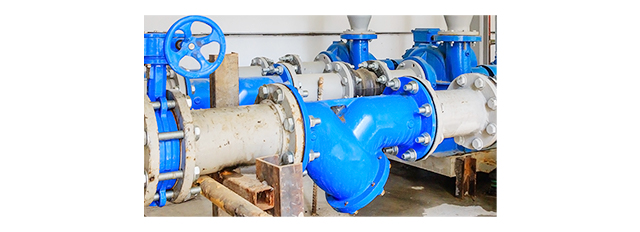
Install upstream of equipment to be protected |
Valves, pumps, meters, and other sensitive equipment must be downstream of the strainer. |
|
Observe flow direction arrow |
The strainer will not function correctly if installed backward — debris would bypass the screen. |
|
Install horizontally with strainer branch pointing downward (preferred) |
Allows debris to settle into the Y-branch and simplifies cleaning. |
|
Vertical installation: flow must be upward into the screen |
Downward vertical flow can cause debris to fall back into the main flow path. |
|
Install isolation valves on both sides (recommended) |
Allows removal or cleaning of the strainer without draining the entire pipeline. |
|
Install a blow-down valve on the drain port |
Facilitates easy debris flushing without removing the cover. |
|
Provide adequate clearance below the strainer |
For access to remove the cover and pull out the screen for cleaning. |
|
Install a pressure gauge on each side (for large systems) |
Differential pressure indicates when cleaning is required. |
Maintenance Guidelines
|
Maintenance Task |
Frequency |
Description |
|
Screen cleaning |
When pressure drop increases (typically 0.5–1.0 bar differential) or every 3–6 months |
Remove cover, extract screen, flush with water, inspect for damage, reinstall. |
|
Gasket inspection |
Every cleaning |
Check cover gasket for wear or damage; replace if necessary. |
|
Blow-down flushing (if equipped) |
Weekly or monthly (in debris-laden water) |
Open blow-down valve briefly to flush accumulated debris without removing cover. |
Signs that cleaning is required:
✔ Increased pressure drop across the strainer (differential pressure gauge reading)
✔ Reduced flow rate at downstream equipment
✔ Pump cavitation or unusual noise
✔ Frequent clogging of downstream sprinklers or nozzles
